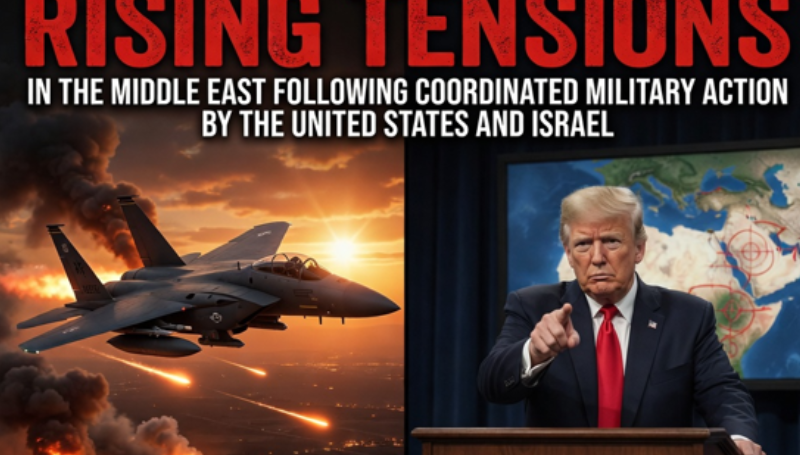
Recent developments in the Middle East have once again drawn global attention following reports of coordinated military actions involving the United States and Israel targeting locations within Iran. These events highlight the fragile nature of an already complex geopolitical environment and raise concerns about regional stability, diplomatic relations, and the possibility of further escalation.
Officials from the countries involved have framed the actions as necessary measures to address national security concerns. At the same time, international observers continue to emphasize the importance of restraint and renewed diplomatic engagement. As information is still emerging, analysts caution that early reports may evolve and should be interpreted carefully.
The roots of these tensions extend back decades, shaped by disagreements over regional influence, security priorities, and Iran’s nuclear program. Diplomatic efforts have produced periods of progress, but setbacks and mutual distrust have often undermined long-term solutions. In recent months, increased military readiness and stronger political rhetoric have contributed to a more volatile atmosphere.
According to initial reports, the military operations targeted specific strategic sites within Iran. Israeli officials indicated that the strikes were intended to counter perceived threats, while U.S. authorities have provided limited details, citing strategic considerations. Independent verification of the full scope and impact of the operation is still ongoing.
The reported actions have prompted widespread international reactions. Several countries have called for calm and urged all parties to avoid further escalation. Stability in the Middle East remains critical not only for regional security but also for global energy markets and economic stability.
Within the United States, the situation has sparked discussion among policymakers regarding the authorization and oversight of military actions. Some members of Congress, including Thomas Massie, have raised questions about the constitutional process and the importance of legislative involvement in decisions of this magnitude.
Overall, the situation underscores the delicate balance between military strategy and diplomatic efforts. As developments continue, the international community is closely monitoring both official statements and on-the-ground realities. The coming days and weeks will be crucial in determining whether tensions escalate further or shift toward renewed dialogue.
Ultimately, these events serve as a reminder of the interconnected nature of global politics and the ongoing need for cooperation, transparency, and careful decision-making in addressing complex international challenges.