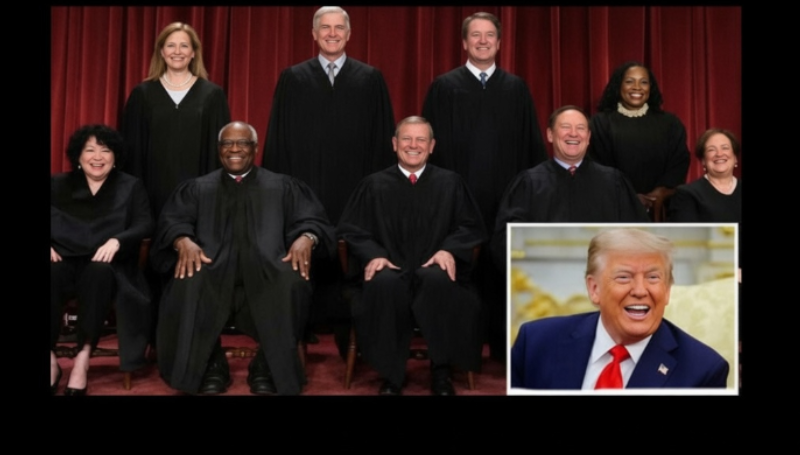
In a narrowly divided decision, the U.S. Supreme Court issued a 5–4 ruling in Monsalvo Velázquez v. Bondi, shedding light on how the justices may approach future immigration cases. The case centered on the interpretation of a 60-day “voluntary departure” period, which allows certain immigrants considered to have “good moral character” to leave the United States on their own rather than face formal deportation.
Justice Neil Gorsuch authored the majority opinion, joined by Chief Justice John Roberts and the Court’s three liberal justices. The majority held that if the 60-day deadline falls on a weekend or federal holiday, it must be extended to the next business day. Gorsuch explained that this interpretation is consistent with longstanding administrative practices in immigration law, where deadlines have historically excluded weekends and legal holidays when they fall at the end of a filing period.
He emphasized that courts generally assume Congress intends new laws to align with established administrative interpretations. In this case, he pointed to the Illegal Immigration Reform and Immigrant Responsibility Act of 1996 as reinforcing that understanding, noting that Congress appeared to adopt the same approach when it enacted the statute.
The decision overturns earlier rulings by the Tenth Circuit Court of Appeals and the Board of Immigration Appeals, both of which had rejected this interpretation in the case of Monsalvo Velázquez, a Colorado resident who had been ordered removed in 2019.
In dissent, Justices Clarence Thomas, Samuel Alito, Brett Kavanaugh, and Amy Coney Barrett argued that the Court should not have taken up the case. Thomas said it should have been sent back to a lower court to resolve outstanding issues, while Barrett raised concerns about the procedural basis of the appeal. Alito, writing separately, rejected the majority’s reasoning and argued that the statute clearly includes weekends within the 60-day period.
Although the ruling focuses on a technical question, it may carry broader implications. The alignment of Gorsuch and Roberts with the Court’s liberal wing suggests a potentially flexible approach to immigration law. Observers say this decision could offer an early indication of how the Court may handle upcoming high-profile immigration disputes, including those involving due process rights and challenges to federal immigration policies.