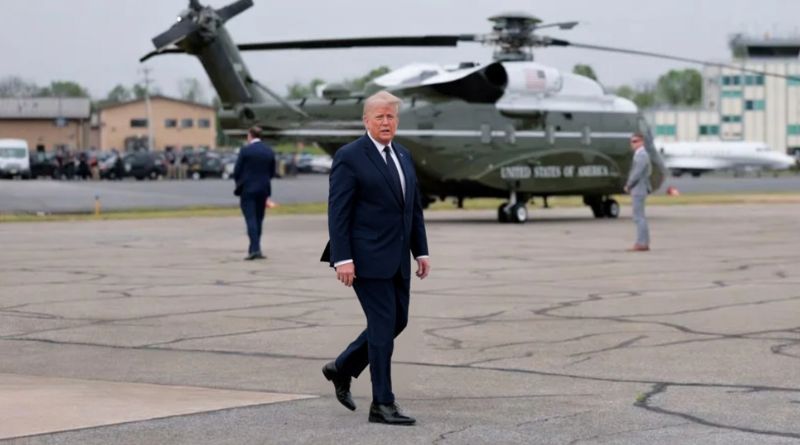
Republicans in the U.S. Congress are increasingly divided over President Donald Trump’s proposal to create a $1.776 billion fund for people he claims were harmed by what he describes as the “weaponization” of government under former President Joe Biden. The disagreement has sparked a major political fight ahead of the upcoming midterm elections.
The controversy intensified this week after the Senate paused consideration of a $72 billion immigration enforcement spending package that includes the proposed compensation fund. Several Republican senators demanded either strict limits on the program or its complete removal before they would support the broader bill.
Democrats have also targeted the proposal, arguing it could reward individuals involved in the January 6, 2021 attack on the U.S. Capitol. The issue has quickly become one of the most contentious parts of the immigration legislation.
The political tension grew further after Senate Majority Leader John Thune blocked an additional $1 billion request tied to construction of a large ballroom at the White House, a project Trump has already begun. Thune reportedly lacked enough Republican support to move the funding forward.
Trump responded forcefully on social media, defending the compensation fund and accusing the Biden administration of abusing government power against political opponents. He said the program would provide long-overdue justice for Americans unfairly targeted by federal authorities.
Still, some Republicans openly criticized the proposal. Senator Thom Tillis of North Carolina called the idea politically damaging and questioned whether convicted January 6 defendants could receive taxpayer-funded compensation after being pardoned. Tillis argued that rewarding individuals who assaulted police officers would be unacceptable to voters.
In the House of Representatives, Republican Congressman Brian Fitzpatrick joined Democratic Congressman Tom Suozzi in introducing legislation that would block any payments from the fund. Representative Don Bacon of Nebraska also warned that both the compensation fund and the White House ballroom project could become “poison pills” for Republicans facing difficult reelection campaigns.
Despite the resistance, many political observers remain skeptical that Republican lawmakers will ultimately oppose Trump. GOP strategist Doug Heye noted that predictions of major Republican revolts against Trump have repeatedly failed over the past decade.
Several Trump allies in Congress strongly defended the president. Representative Abraham Hamadeh argued that Republicans were elected to support Trump’s “America First” agenda and criticized Senate Republicans for slowing it down.
Meanwhile, Democrats are preparing to force Republicans into difficult votes on amendments related to the fund. Proposed changes include banning payments to individuals who assaulted law enforcement officers during the Capitol riot and requiring full public disclosure of any compensation distributed through the program.
As Congress returns from recess in June, lawmakers are expected to continue negotiating possible restrictions and oversight measures for the controversial fund while political pressure intensifies on both parties.