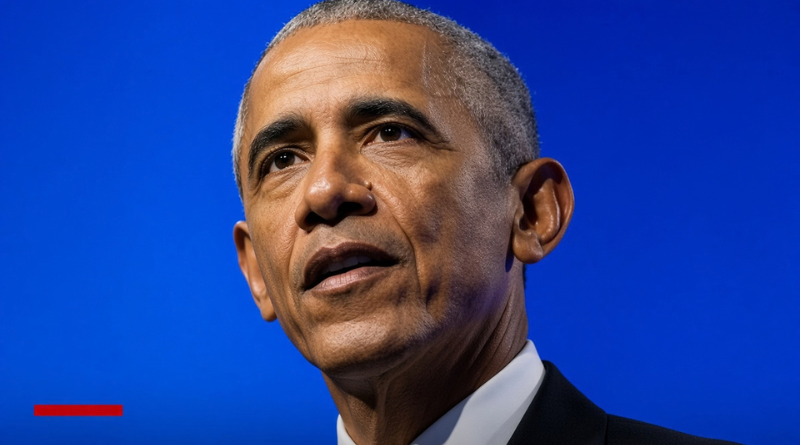
Former President Barack Obama criticized law firms, universities and businesses that have reached agreements with President Donald Trump’s administration, arguing that institutions should be willing to resist political pressure.
Obama made the remarks during an interview with comedian Marc Maron for the final episode of Maron’s long-running “WTF” podcast, released October 13, 2025.
The former president said he understood why organizations might seek settlements or agreements with the administration, particularly when federal funding, contracts or regulatory decisions could be affected.
However, Obama argued that businesses and institutions should consider whether avoiding immediate consequences comes at the expense of principles they previously claimed to defend.
He specifically criticized concessions involving employment practices, diversity policies and other areas where companies or institutions have adjusted their positions following pressure from the Trump administration.
Obama said organizations should be able to tell the administration that they would not accept demands determining who they could hire or promote based on political criteria.
His comments appeared to reference pressure associated with senior Trump adviser Stephen Miller, whom Obama mentioned while discussing changes to workplace policies.
The former president acknowledged that standing up to an administration with significant political and regulatory power can involve genuine risks for companies and institutions.
At the same time, Obama argued that those risks should not automatically lead organizations to surrender positions they believe are important.
“We all have this capacity, I think, to take a stand,” Obama said during the conversation, according to an advance transcript of the interview.
He also rejected comparisons suggesting that resistance would necessarily require extraordinary personal sacrifice, saying organizations were not facing circumstances comparable to Nelson Mandela’s imprisonment.
Obama’s comments came amid a broader pattern of companies, universities and law firms negotiating directly with the Trump administration over policies and federal relationships.
Several law firms have reached agreements with the administration after facing executive actions or threats affecting their federal business, while universities have negotiated settlements involving federal funding.
Businesses have also faced pressure over issues ranging from diversity programs to investments, manufacturing commitments and government contracts.
Trump has increasingly used presidential authority to intervene in private-sector decisions, including negotiations involving major corporations and strategic industries.
In one prominent example, the administration has negotiated arrangements involving government interests in certain corporate transactions, illustrating the expanding role of the federal government in private business decisions.
Obama’s criticism was not limited to corporate America. He also discussed universities and law firms, arguing that institutions with substantial resources have opportunities to defend their independence.
The former president’s remarks came during a wider discussion about the state of American democracy and how institutions respond when political power becomes concentrated.
He also criticized Trump’s deployment of National Guard forces to Chicago, describing the move as an effort to bypass established limitations on domestic military involvement.
Obama argued that disagreements between federal and local authorities should not automatically result in Washington taking control of local law enforcement responsibilities.
During the interview, Obama also urged Democrats to communicate with voters without adopting what he described as an overly judgmental approach toward people who disagree with them.
He said political movements need to recognize their own blind spots and avoid presenting themselves as morally superior to ordinary Americans.
The wide-ranging interview therefore combined Obama’s criticism of Trump’s administration with a broader argument about institutional independence, political accountability and how Americans should respond to a changing political environment.