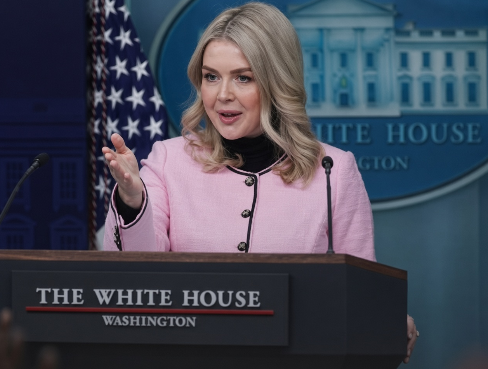
WASHINGTON — White House Press Secretary Karoline Leavitt defended the Trump administration’s changes to White House media access, arguing that the policy has expanded opportunities for a wider range of news organizations while challenging the traditional role of major wire services and the White House Correspondents’ Association.
Speaking during a media event hosted by Axios co-founder Mike Allen, Leavitt rejected the characterization that the administration had imposed restrictions on journalists. Instead, she said the White House had sought to broaden participation in the limited press pools that accompany the president and cover events in the Oval Office and elsewhere.
Leavitt Says Access Has Expanded
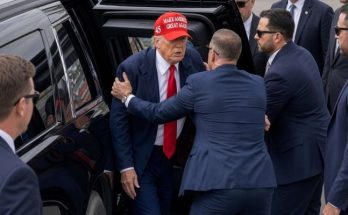
Allen questioned whether changes affecting the Associated Press and other wire services could make it more difficult for journalists to document major presidential moments. He cited AP photographer Evan Vucci’s widely recognized photograph of Donald Trump following the 2024 assassination attempt in Butler, Pennsylvania.
Leavitt responded that she viewed the administration’s changes as an effort to diversify access rather than restrict it.
She argued that thousands of organizations hold White House press credentials, while only a limited number can participate in certain presidential press pools. According to Leavitt, there should be more opportunities for print, digital and other outlets to participate rather than allowing a small number of established organizations to maintain regular positions.
The White House has previously expanded access for so-called “new media” organizations. Leavitt announced such an initiative early in the Trump administration, including a rotating briefing-room seat for newer outlets that meet White House and Secret Service requirements.
The White House Correspondents’ Association, however, has strongly criticized changes to the traditional press-pool structure.
WHCA Raises Concerns Over Wire Services
In an April 2025 statement, the WHCA said the government should not control independent media organizations covering the administration. The organization specifically defended the traditional roles of the Associated Press, Reuters and Bloomberg in presidential press pools, arguing that wire services distribute their reporting to thousands of other news organizations and millions of readers.
The WHCA has also emphasized that it does not issue White House credentials or independently control access to the complex. Its role includes organizing aspects of the press pool and representing journalists on access-related matters, while the White House Press Office and Secret Service handle credentials and security access.
The association’s own guidance describes the domestic presidential travel pool as a 13-person group. Its traditional composition has included representatives from wire services, photographers, television, radio and print outlets.
Leavitt argued that the administration should not allow the WHCA board alone to determine which organizations receive opportunities to accompany the president or attend certain presidential events.
Biden Media Numbers Become Part of the Debate
Leavitt also pointed to former President Joe Biden’s media engagement record as a comparison.
Axios reported in July 2024 that Biden had participated in 164 press conferences and interviews as of June 30 of his fourth year in office. The same analysis, based on research by presidential scholar Martha Kumar, counted 468 such interactions for Trump at the comparable point in his first term. The figures for other recent presidents included 570 for Barack Obama, 248 for George W. Bush, 310 for Bill Clinton, 376 for George H.W. Bush and 262 for Ronald Reagan.
Those figures measure press conferences and interviews and should not be interpreted as a complete measure of every interaction a president has with the media.
Leavitt used the comparison to argue that Trump has maintained a more visible relationship with reporters, while the administration has simultaneously attempted to change how access is distributed among news organizations.
Ongoing Debate Over Presidential Press Access
The dispute reflects a broader debate over how the White House should balance established press traditions with the expanding role of digital and independent media.
The Trump administration says its approach gives more organizations an opportunity to cover the president. The WHCA has argued that changes to traditional pool arrangements could weaken consistent access for organizations whose reporting is distributed broadly across the news industry.
At the center of the disagreement is the limited space available for presidential events. While not every journalist can accompany the president or enter a small meeting space, both sides have emphasized the importance of ensuring that the public continues to receive timely coverage of presidential activities.
As the administration continues to reshape its media-access policies, the debate over who receives those limited opportunities is likely to remain an important issue for the White House press corps.