Warren County GOP Voids Disputed Chairman Vote – But It Was a Party Appeal, Not a Judge Finding Fraud
A bitter fight inside the Warren County Republican Committee produced a real overturned election, a real revote and a real change in leadership.
But it was not a judge who overturned the result.
And no court has publicly found that “fraudulent ballots” determined the original election.
The dispute began with the Warren County Republican Committee’s February 12, 2026 mass meeting in Front Royal, Virginia.
Local attorney David Silek was initially declared the winner of the chairman’s race, defeating Scott Lloyd 225 votes to 206 – a margin of 19 votes.
Lloyd, a Front Royal attorney and former Trump administration official, challenged the result through the Republican Party’s internal appeals process.
His appeal alleged serious procedural irregularities.
Supporters said qualified Republican voters were turned away, ballot controls were inconsistent, people with Democratic voting histories received ballots without completing required renunciation paperwork, and the committee’s membership was reduced from 251 seats to 102 without proper authority.
Those allegations were enough to persuade Republican Party officials that the February process should not stand.
But the institution that acted was the Republican Party itself.
On March 31, the Sixth District Republican Committee voted 19-5 to sustain Lloyd’s appeal and set aside the February result.
David Silek then appealed that decision to the Republican Party of Virginia.
The state party ultimately left the February result nullified and a new election was ordered.
On August 5, Warren County Republicans voted again.
This time Lloyd won decisively, defeating Silek 562-441.
That is the actual sequence.
The first result was invalidated through a party appeal.
A second party election was held.
And Lloyd won that second vote by 121 votes.
That is politically significant.
It does not require turning an internal Republican Party dispute into a judicial finding of election fraud that never occurred.
The Original Election Was Close
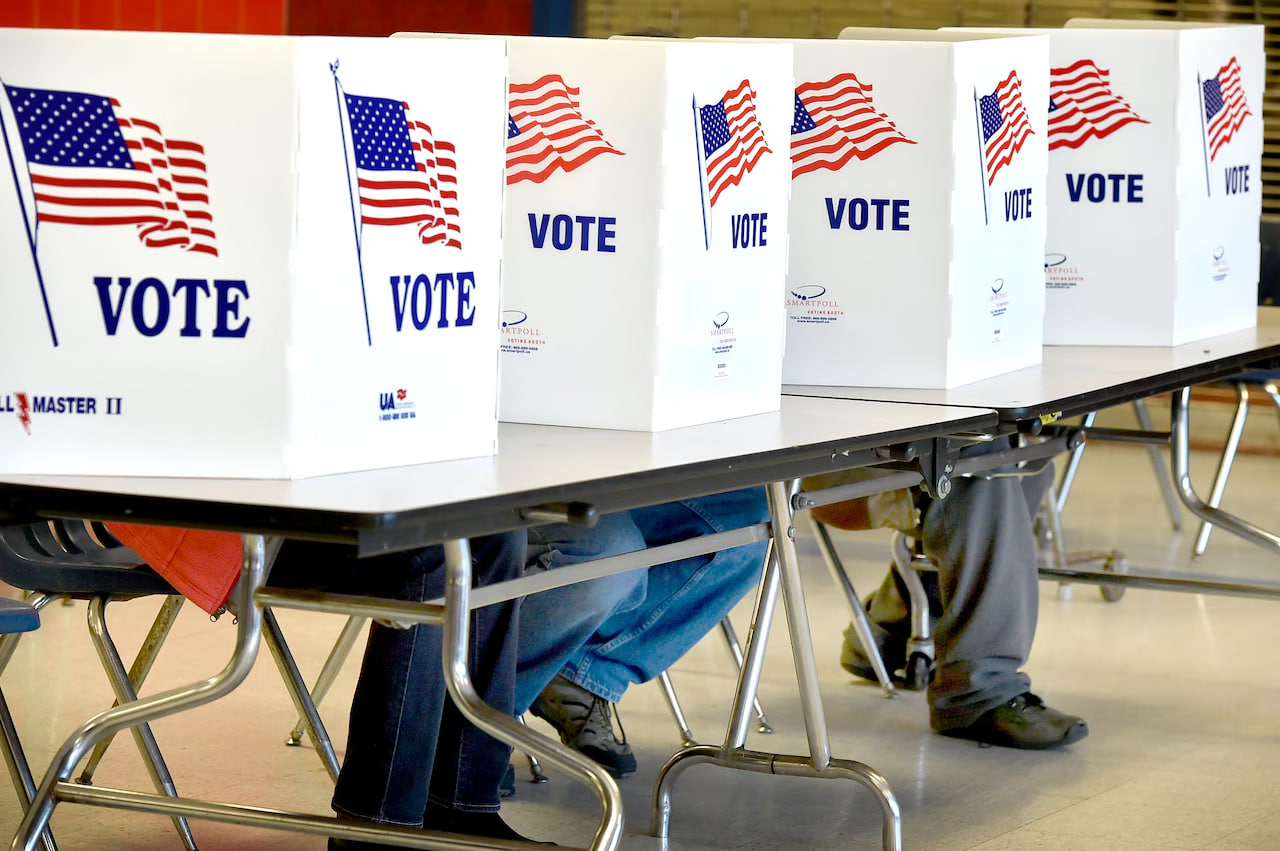
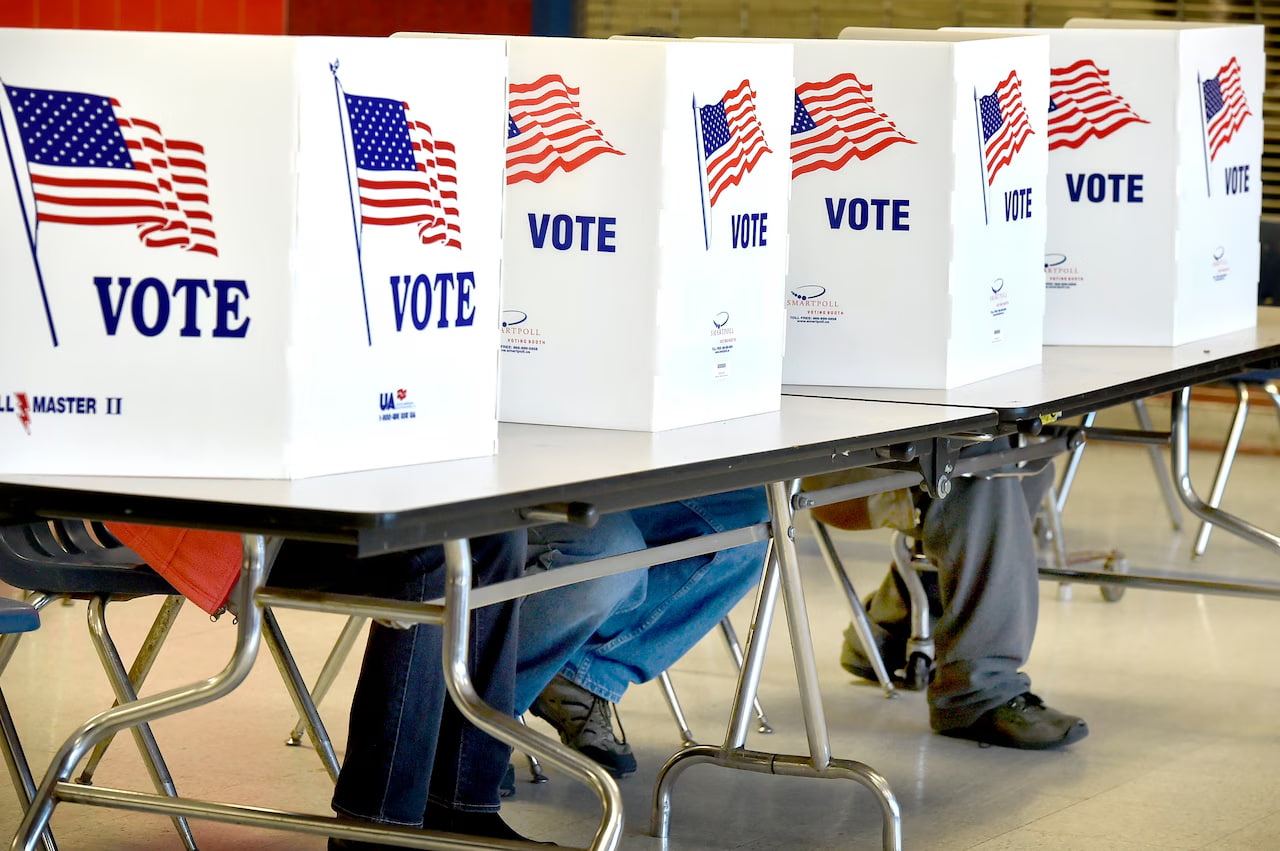
The February 12 mass meeting drew an unusually large crowd to the Front Royal Volunteer Fire Department.
Silek and Lloyd were competing to lead the Warren County Republican Committee.
When the ballots were counted, Silek received 225 votes and Lloyd received 206.
A 19-vote margin made every procedural dispute important.
If dozens of otherwise qualified participants were prevented from voting, the number could have exceeded the margin.
If voters who did not satisfy Republican Party participation rules received ballots, that could also matter.
And if ballot distribution or counting controls were inadequate, party officials had a legitimate reason to ask whether the process met the standards required by the Republican Party of Virginia.
Those questions became the basis for Lloyd’s appeal.
But they should be described as procedural challenges and allegations unless a competent tribunal made more specific findings.

That distinction is especially important because the word “fraud” carries a stronger meaning than “irregularity.”
A badly managed meeting can be invalid without proving that anyone deliberately fabricated ballots or committed a crime.
Lloyd Challenged the Result Inside the Republican Party
Lloyd did not initially go to a Virginia judge and ask a court to declare him the winner.
He filed an appeal with the Sixth District Republican Committee under the Republican Party of Virginia’s internal rules.
The appeal was supported by affidavits and statements from people who attended the February meeting.
Among the allegations were that qualified participants were denied entry after the venue reached capacity, even though some attendees later left.
Lloyd also argued that the credentials process did not uniformly enforce party rules governing people who had participated in another party’s nominating process during the previous five years.
Under the Republican Party of Virginia’s rules, such participants may be required to renounce their previous affiliation or participation before voting in a Republican nomination or party process.
Lloyd’s side said those safeguards were not consistently applied.
He also challenged the committee’s decision to reduce its membership structure from 251 positions to 102.
Those claims were serious enough to receive a formal hearing.
They were not a criminal indictment.
They were not a judicial election-contest ruling.
They were arguments that the Republican Party’s own procedures had been violated.
The Sixth District Committee – Not a Judge – Overturned the February Result
On March 31, members of Virginia’s Sixth District Republican Committee met in Fisherville to consider Lloyd’s appeal.
After hearing arguments from both sides, the committee voted 19-5 to sustain the appeal.
Two members, including Sixth District Chairman John Massoud, abstained.
The practical effect was to nullify the February chairman election and the disputed restructuring that had accompanied it.
That vote is the event that many partisan accounts later described as an “election being overturned.”
But calling it a court ruling changes the nature of what happened.
The Sixth District Republican Committee is a political party body.
It can interpret and enforce Republican Party rules.
It is not a Virginia circuit court.
Its members are party officials, not judges acting under state judicial authority.
That means the decision can establish who the Republican Party recognizes as its local leadership under party rules.
It does not amount to a judicial finding that state election law was violated or that criminal fraud occurred.
The Evidence Included Allegations of Democratic Participation
One of the most politically explosive claims involved Democrats allegedly participating in the Republican committee vote.
Virginia does not register voters by political party in the same way some states do.
That means simply identifying someone as a “Democrat” does not automatically answer whether the person was legally or procedurally eligible to participate in a Republican Party mass meeting.
The relevant issue was the Republican Party’s own participation rules.
Breitbart reported that Sixth District Chairman John Massoud acknowledged being aware that at least three Democrats were present at the February meeting.
Lloyd’s appeal alleged that some people with histories of supporting or participating in Democratic politics received ballots without completing required Republican Party renunciation statements.
If true, that would be a legitimate internal-party-rule problem.
But it is still different from proving that “fraudulent ballots” were manufactured.
A ballot cast by someone whom the party later decides was procedurally ineligible is not the same thing as a counterfeit ballot.
That terminology matters.
The appeal was about who should have been allowed to participate, how the meeting was managed and whether the party’s own rules were followed.
Claims That Republicans Were Turned Away Were Also Central
Lloyd’s side also submitted statements from people who said they were prevented from entering the meeting and voting.
The venue was crowded.
Accounts of the event describe significant confusion over capacity, registration, who could enter and whether additional voters would be admitted after people inside had completed their ballots.
Lloyd argued that some of the people left outside were supporters of his campaign.
Because the original margin was only 19 votes, even a relatively small number of excluded voters could have affected the result.
That is a strong reason for a political party to repeat an election if it concludes that its participation procedures were unreliable.
It is not proof that the excluded voters definitely would have changed the outcome.
Nor is it proof that they were excluded as part of a coordinated criminal conspiracy.
A fair reconstruction should separate those possibilities.
The evidence supported a substantial procedural challenge.
The more dramatic motives attributed to the opposing faction remain political allegations unless independently proven.
The 251-to-102 Membership Change Was a Separate Dispute
The chairman vote was not the only issue.
The February meeting also became a fight over the size and composition of the Warren County Republican Committee itself.
Lloyd’s appeal said the committee had previously operated with a membership structure of 251 and that the meeting purported to reduce that number to 102.
Supporters of Lloyd argued that the reduction excluded longtime conservative activists who had submitted applications and dues.
Silek’s side disputed the characterization of the process and argued that both factions experienced membership disagreements.
The Sixth District appeal process treated the membership restructuring as part of the broader controversy.
This is another area where campaign language should not be mistaken for an established corruption finding.
A political faction may believe a membership cap was designed to weaken it.
That motive can be argued.
But describing the reduction as a proven “power grab” requires evidence of intent beyond the fact that the membership number changed.
The strongest factual statement is simpler:
The restructuring was disputed, it became part of Lloyd’s successful internal appeal, and it did not survive the party’s review of the February meeting.
Silek Was Allowed to Appeal Too
The March 31 decision did not instantly make Lloyd chairman.
The Republican Party’s process allowed Silek to seek further review.
Silek said the Sixth District decision was wrong and indicated he would appeal to the Republican Party of Virginia.
That matters because it shows the dispute operated through a layered party process rather than a one-sided judicial decree.
The state party ultimately upheld the decision to discard the February result.
By late May, an interim leadership structure had been installed and the path was cleared for a new chairman election.
The final remedy was not to declare Lloyd the winner of the February vote.
It was to hold the election again.
That is an important difference.
If the party had established that the accurate February tally was actually Lloyd 225 and Silek 206, it could have simply recognized Lloyd.
Instead, party officials decided the process was sufficiently compromised that a fresh vote was the cleaner solution.
The August Revote Produced a Clear Winner
The new election took place on August 5.
Turnout was dramatically larger than in February.
More than 1,000 people voted in the chairman race.
Lloyd received 562 votes.
Silek received 441.
Lloyd’s margin was 121 votes.
The Warren County Republican Committee publicly congratulated Lloyd as its new chairman.
Silek also acknowledged the result and congratulated him.
That August outcome is the event that actually made Lloyd chairman through a completed election.
It is therefore misleading to say a judge “declared a new winner.”
No judge took the February tally, removed supposedly fraudulent ballots and recalculated the vote in Lloyd’s favor.
The party nullified one election and held another.
The voters in the second election selected Lloyd.
The Second Vote Does Not Retroactively Prove the First Vote Was Rigged
Lloyd’s decisive August victory will naturally be cited by his supporters as evidence that the February result did not represent the true preferences of Warren County Republicans.
Politically, that argument has force.
The electorate in the revote was much larger, and Lloyd won comfortably.
But mathematically, the August result cannot prove what would have happened under a perfectly administered February meeting.
The two electorates were different.
Turnout was different.
Campaigns had months to mobilize supporters.
The controversy itself attracted attention and may have changed participation.
Some people who did not attend in February came in August.
Others may have changed their views.
So the August result demonstrates that Lloyd won the properly ordered revote.
It does not establish that the February ballots, if counted under an ideal procedure, would necessarily have produced the same result.
Scott Lloyd Does Have a Trump-Administration Background
Lloyd’s political biography is another part of why the local fight attracted attention beyond Warren County.
He previously served in the federal government, including appointments at the Department of Health and Human Services during the George W. Bush and Donald Trump administrations.
He served as director of the Office of Refugee Resettlement during Trump’s first term.
He has also worked in conservative policy and advocacy circles and served on the Front Royal Town Council.
That makes it reasonable to describe him as a former Trump administration official.
But the Warren County chairman contest was not a public federal election personally run by President Trump.
It was an internal local Republican Party leadership election.
Trump did not become the legal mechanism by which the result was overturned.
Republican Party officials applying Republican Party rules did.
The ‘America First Versus RINO’ Framing Is Political, Not Judicial
Supporters of Lloyd portrayed the dispute as part of a larger ideological struggle inside the Republican Party.
They described Lloyd as an America First conservative and Silek’s allies as establishment Republicans or “RINOs.”
Silek rejected that description.
He pointed to decades of Republican involvement and described himself as a conservative on issues including abortion, taxation and limited government.
That disagreement is an ordinary intra-party ideological fight.
A party appeals ruling does not decide which faction is philosophically the “true Republican Party.”
It decides whether a particular party process complied with the party’s rules.
Likewise, the August electorate chose Lloyd to lead the committee.
That gives him organizational authority.
It does not transform every accusation made during the campaign into an established fact.
Allegations of Anti-Catholic Hostility Should Be Presented as Allegations
The original account also describes anti-Catholic hostility as part of the establishment faction’s effort to remove conservative activists.
That issue appeared repeatedly in partisan reporting and statements from Lloyd supporters.
Some local activists said Catholics were disproportionately removed from committee membership or treated with hostility because of their activism on library and social issues.
Those claims may be relevant to understanding the intensity of the local dispute.
But they require careful attribution.
The Sixth District’s decision to uphold Lloyd’s appeal was not a judicial finding that local officials engaged in unlawful anti-Catholic discrimination.
Nor does the August revote establish such discrimination.
The appropriate formulation is that Lloyd supporters alleged anti-Catholic hostility and viewed the membership changes through that lens.
Anyone accused of such conduct should be given the distinction between allegation and established finding.
This Was Not a Virginia Public Election
Another important source of confusion is the repeated use of the word “election.”
The Warren County Republican Committee chairman is selected through a party process.
That process uses ballots and voters.
It can be contested and governed by formal rules.
But it is not the same as a November election for governor, Congress, sheriff or county supervisor administered by Virginia election officials.
State election boards did not certify Silek as a public officeholder.
A judge did not remove him from a government office.
The Republican Party was deciding who would lead one of its local committees.
That does not make the dispute trivial.
Local party committees influence nominations, volunteer networks, endorsements, turnout operations and the ideological direction of a political party.
But it changes the legal vocabulary that should be used.
This was fundamentally an internal party-governance dispute.
Why the Procedural Victory Still Matters
Correcting the legal description does not erase the significance of what Lloyd accomplished.
He lost the initial vote by 19.
Instead of accepting the result, he assembled a formal appeal, gathered affidavits, identified alleged rule violations and persuaded a higher Republican Party committee to set the result aside.
His opponents then used their own appeal rights.
The state party left the result void.
A fresh election was held.
Lloyd then won by 121 votes.
That is a substantial political victory.
It shows that internal party rules can matter even in a local contest that receives little national attention.
It also shows why election procedures have to be clear before voting begins.
Capacity rules, credentialing standards, voter eligibility, ballot control and membership qualifications can become decisive when a race is close.
If participants do not trust those procedures, the legitimacy of the result suffers even before anyone proves intentional fraud.
What the Evidence Does and Does Not Establish
The evidence establishes several important facts.
The February chairman election was close.
Lloyd challenged it.
His challenge contained numerous allegations of procedural irregularities supported by witness statements.
The Sixth District Republican Committee upheld his appeal by 19-5.
The Republican Party of Virginia did not restore the February result.
A new vote was ordered.
Lloyd won that vote 562-441.
Those are strong facts.
The evidence available publicly does not establish several of the strongest claims in the original account.
There was no judge who overturned this election.
There is no public court judgment declaring that fraudulent ballots decided the February vote.
There is no public criminal finding that Silek, local officials or an “establishment machine” coordinated a scheme to rig the election.
There is no judicial ruling validating a nationwide claim that Republican establishment figures systematically steal local party committees from America First activists.
Those are political interpretations placed on top of a narrower dispute.
The Strongest Headline Is Less Dramatic – and More Accurate
The story does not need invented judicial drama to be interesting.
A former Trump administration official lost a local Republican leadership election by only 19 votes.
He challenged the process.
A higher Republican Party committee agreed that the result should be thrown out.
The state party allowed that remedy to stand.
Hundreds of additional voters turned out for a second election.
And Lloyd won by a clear margin.
That is a meaningful grassroots political reversal.
It demonstrates that a disputed internal election can be overturned when party officials conclude their own rules were not adequately followed.
It also creates a warning for every political organization, Republican or Democratic:
If eligibility rules are vague, credentials are inconsistently enforced, ballot controls are disputed and potential voters are turned away during a close contest, the outcome may not survive internal review.
That is the real lesson from Warren County.
Not that a judge discovered fraudulent ballots.
Not that a court declared the MAGA movement victorious.