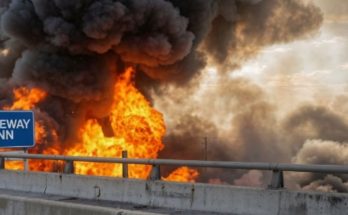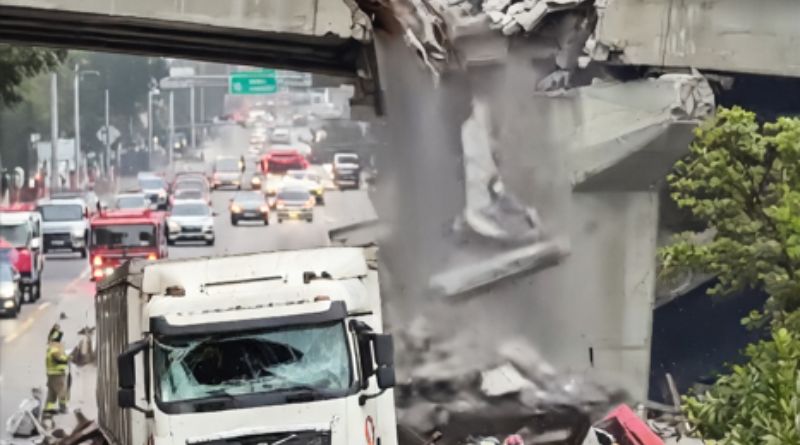
A quiet Friday morning in Richmond was disrupted when a commercial truck collided with the Cambie Road overpass along Knight Street, causing major traffic delays and prompting an urgent structural inspection. The incident occurred around 7:15 a.m. Pacific Time when the truck, towing a dump trailer, attempted to pass beneath the overpass with its trailer bed still raised. The elevated trailer struck the underside of the bridge and became lodged, while the force of the impact separated the truck cab from the trailer.
Although no injuries were reported, the collision raised immediate concerns about the structural integrity of the overpass. Authorities quickly closed all southbound lanes and dispatched engineers to assess potential damage. Crews worked throughout the morning to stabilize the scene, remove debris, and evaluate whether the bridge could safely support traffic. The Richmond Road Safety Unit took charge of the investigation, coordinating closely with provincial transportation officials to conduct a detailed review.
This incident is part of a growing pattern across British Columbia, where over-height commercial vehicles have repeatedly struck bridges and overpasses. Similar cases have been reported throughout the Lower Mainland and Fraser Valley, often involving dump trucks or improperly secured loads. In many instances, these accidents are attributed to driver oversight, such as failing to lower trailer beds or misjudging clearance heights. However, experts also point to contributing factors like outdated infrastructure, inconsistent signage, and reduced clearances caused by resurfacing projects.
From an engineering standpoint, even minor-looking impacts can pose serious risks. Structural damage is not always visible and may include internal stress fractures, weakened joints, or compromised support elements. For this reason, every overpass strike requires thorough inspection using both visual assessments and advanced testing methods before the structure can be deemed safe for public use.
The disruption extended beyond safety concerns, significantly affecting transportation and commerce in the region. Knight Street is a key route connecting Richmond to Vancouver and other commercial hubs, and its closure created heavy congestion on alternate roads. Commuters faced long delays, while businesses experienced interruptions in deliveries and supply chains, highlighting the broader economic impact of such incidents.
In response to the increasing frequency of theseوادث, industry leaders and safety experts are calling for stronger preventive measures. Proposed solutions include installing over-height detection systems that use sensors to warn drivers before they reach low-clearance structures, as well as integrating bridge clearance data into GPS navigation systems used by commercial fleets. Additionally, improved driver training and stricter pre-trip inspection protocols are seen as essential steps in reducing human error.
The Richmond collision underscores the need for a comprehensive approach to transportation safety. As freight traffic continues to grow and infrastructure ages, the risk of similar incidents may increase unless proactive steps are taken. By combining technology, better training, and ongoing infrastructure improvements, authorities and industry stakeholders can work together to prevent future disruptions and ensure safer roads for everyone.