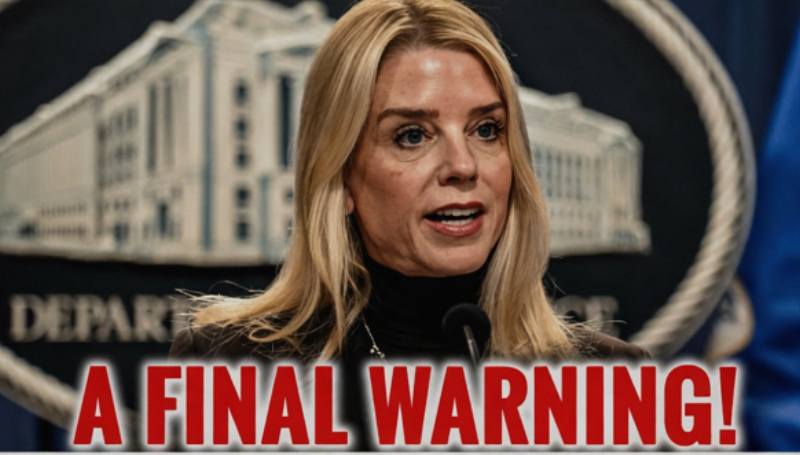
Amid ongoing debates about civil unrest in the United States, former Florida Attorney General Pam Bondi has issued a strong statement addressing violence associated with protests. Her remarks focus on the need for accountability and the importance of maintaining public order, while also sparking renewed discussion about how the country should respond to unrest.
Recent tensions in Los Angeles reflect a broader national pattern in which demonstrations—often rooted in concerns about policing, inequality, and social justice—have, at times, escalated into property damage, clashes with law enforcement, and public safety concerns. While many protests remain peaceful, instances of violence tend to draw significant political and media attention.
In her comments, Bondi emphasized that while the right to protest is fundamental in a democratic society, destructive behavior undermines both public safety and the credibility of social movements. She argued that acts such as looting, vandalism, and assaults should be treated as criminal offenses and addressed through the legal system. Her position reflects a law-and-order perspective that prioritizes enforcement and deterrence as essential to restoring stability.
Supporters of Bondi’s stance agree that without clear consequences, unrest can escalate and harm communities, particularly small businesses and residents caught in the middle of disruptions. They argue that strong enforcement helps prevent further violence and reassures the public that safety remains a priority.
However, critics see the issue differently. Many believe that focusing primarily on punishment overlooks the deeper causes of unrest. They point to longstanding concerns such as economic inequality, racial disparities, and controversial policing practices as key drivers behind public frustration. From this perspective, enforcement alone cannot resolve the underlying tensions that lead people to protest in the first place.
This divide reflects a larger national conversation that has persisted since events like the George Floyd protests, which brought widespread attention to issues of policing and systemic inequality. Since then, policymakers, activists, and community leaders have continued to debate how to balance public safety with meaningful reform.
Bondi’s comments highlight one side of this debate: that maintaining order is a necessary foundation for any functional society. Others counter that lasting stability depends not only on enforcement but also on addressing the root causes of dissatisfaction and distrust.
As cities like Los Angeles navigate these challenges, the path forward likely requires a combination of approaches. Ensuring accountability for criminal actions can coexist with efforts to improve community relations, reform institutions, and expand economic opportunities. The difficulty lies in finding the right balance—one that protects both public safety and civil rights.
Ultimately, the reaction to Bondi’s statement underscores how divided public opinion remains. For some, her message is a necessary reminder of the rule of law. For others, it represents an incomplete approach to a complex issue.
What remains clear is that the conversation around protest, justice, and public order is far from settled. As similar situations arise across the country, the challenge will be crafting responses that address immediate concerns while also working toward long-term solutions.