The first explosions did more than damage buildings—they disrupted the long-standing assumption that the conflict could still be contained within limited boundaries. As reports emerged of U.S. and Israeli forces striking targets inside Iran, global attention quickly turned to what many feared could be the start of a far more serious regional escalation.
In Tehran, senior military officials were said to have moved swiftly to assess the scale and impact of the strikes. Across the wider region, governments and allied groups reacted with caution, carefully monitoring developments while considering possible political and security consequences. At the same time, international financial markets reacted almost immediately, reflecting growing concern about instability, particularly in relation to energy supplies and global trade routes that depend on the region.
According to reports cited by various officials, the strikes were part of an operation referred to as “Operation Epic Fury,” described by U.S. and Israeli sources as a coordinated effort aimed at weakening Iran’s military infrastructure and limiting its nuclear-related capabilities. Officials supporting the action argued that the targeted sites were linked to systems they believed could pose an imminent threat. They stated that the intention was to disrupt operational capacity and reduce the likelihood of future attacks, rather than to trigger a prolonged war.
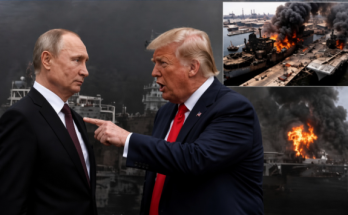
As details began to circulate, images and videos shared online and through media channels appeared to show significant damage at certain facilities, including destroyed or heavily damaged air-defense installations and military compounds. However, Iranian state media presented a different narrative, claiming that some incoming projectiles had been intercepted and suggesting that the overall effectiveness of the strikes was limited. Iranian officials also issued strong statements promising retaliation, warning that the response to the attacks would be significant.
The exchange of claims and counterclaims quickly heightened diplomatic tension. Several governments, particularly in Europe, called for restraint and urged all parties to avoid further escalation. International observers warned that continued military action could expand the conflict beyond its current scope, potentially drawing in additional regional and global actors.
Amid the political and military developments, ordinary civilians in cities such as Tehran and Tel Aviv found themselves in a state of uncertainty. Many followed news updates closely, listened for emergency alerts, and waited anxiously for further developments. For them, the key concern was whether the night’s strikes represented a contained incident or the beginning of a broader and more dangerous phase of conflict.