In the aftermath of the attempted shooting at the White House Correspondents’ Dinner on April 25, 2026, two very different narratives began to unfold online. One focused on the verified facts of a serious security breach. The other, spreading rapidly across social media, claimed the incident had been staged. While both conversations gained attention, they are not equally grounded in evidence.
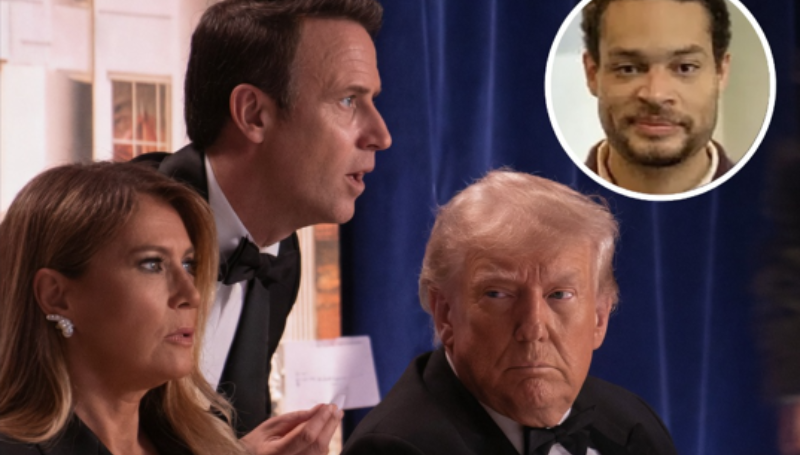
According to confirmed reports, the incident occurred around 8:35 p.m. at the Washington Hilton in Washington, D.C., where the annual dinner was taking place. A 31-year-old man identified as Cole Tomas Allen forced his way through a security checkpoint while armed with a shotgun, a handgun, and multiple knives. He exchanged gunfire with law enforcement, and a Secret Service agent was struck in the chest but survived due to a bulletproof vest. Allen was quickly subdued and taken into custody. Authorities later recovered a written document outlining his grievances and listing political figures as targets, indicating a clear motive.
Despite these documented facts, a wave of conspiracy theories emerged almost immediately. Some online users claimed the camera angles capturing the evacuation were “too perfect,” suggesting coordination. Others pointed to unrelated details, such as a deleted social media post allegedly showing Allen wearing certain clothing, or an old online mention of his name, implying a pre-planned plot. None of these claims have been verified or supported by credible evidence.
One of the more widely discussed questions—how the attacker managed to get so close to the event with multiple weapons—has a more straightforward explanation. Several attendees reported that security inside the hotel was less strict than expected. Identification checks were inconsistent, and access to certain areas of the building was not tightly controlled. Lawmakers present at the event described the situation as a clear security failure. While concerning, this points to vulnerabilities in event planning rather than evidence of a staged incident.
Another conspiracy claim involved a live television moment in which a reporter’s phone call abruptly disconnected. Some speculated that the network had intentionally cut the feed. However, the reporter later clarified that the call dropped بسبب poor signal inside the crowded ballroom and went on to complete her report through other channels.
A particularly viral claim centered on comments made by White House press secretary Karoline Leavitt before the dinner. In a red carpet interview, she remarked that there would be “some shots fired” during the evening. Online posts quickly suggested this was proof of foreknowledge. In reality, the phrase is a common expression referring to jokes or verbal jabs, especially in the context of the Correspondents’ Dinner, which traditionally includes comedic speeches. Fact-checking organizations confirmed that her comment was taken out of context.
Some discussions also noted that the incident could benefit political narratives, particularly regarding security funding or proposed infrastructure changes. While it is fair to debate how such events are used politically, the existence of political consequences does not imply the event itself was fabricated.
The rapid spread of these conspiracy theories highlights a broader pattern. In moments of crisis, especially those involving prominent political figures, uncertainty and emotion can fuel speculation. However, the available evidence—from eyewitness accounts to official investigations—supports the conclusion that this was a real and serious security breach, not a staged event.