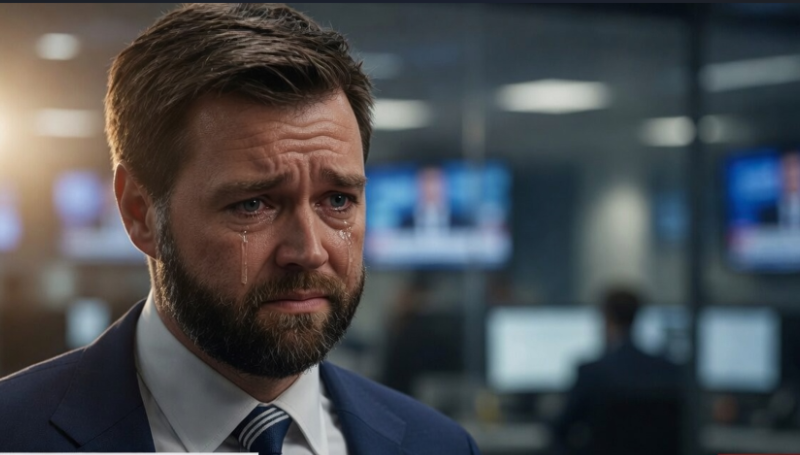
JD Vance’s recent remarks on the possibility of deploying peacekeeping forces to Ukraine have sparked notable backlash in the United Kingdom, drawing criticism from veterans, military figures, and political leaders who viewed his comments as dismissive of allied contributions.
In an interview, the U.S. Vice President argued that an American economic commitment to Ukraine—such as a strategic agreement involving critical minerals—could serve as a stronger security guarantee than deploying “20,000 troops from some random country that hasn’t fought a war in 30 or 40 years.” Although no countries were explicitly named, the remarks were widely interpreted in the UK and France as a reference to NATO allies that have indicated willingness to participate in any future post-conflict stabilization mission in Ukraine.
The reaction in Britain was swift. Military veterans and former service members strongly rejected the implication that allied nations lacked meaningful combat experience. Prominent voices such as Johnny Mercer and Andy McNab emphasized that British forces have fought extensively alongside American troops in modern conflicts, particularly in Iraq and Afghanistan. They highlighted that UK personnel served in active combat roles, often in some of the most dangerous operational environments, and that hundreds of British soldiers lost their lives in those joint missions. For them, the suggestion that Britain’s military contribution was somehow secondary or less relevant was both inaccurate and disrespectful.
Political leaders also weighed in, stressing the importance of careful language among close allies. Prime Minister Keir Starmer and senior defense officials underscored that the strength of NATO rests not only on military capability but also on trust, shared history, and mutual recognition. They warned that rhetoric perceived as dismissive could strain relationships at a time when Western unity is considered essential in responding to ongoing global security challenges, including the war in Ukraine.
Within diplomatic and defense circles, the controversy was viewed less as a policy disagreement and more as a question of tone and perception. While the substance of U.S. strategy toward Ukraine remains centered on long-term security guarantees and deterrence, critics argued that careless phrasing risks undermining confidence among allies who have consistently contributed to joint military operations.
Following the backlash, Vance moved to clarify his comments. He stated that his remarks were not directed at the United Kingdom or France, and he praised both nations for their longstanding record of fighting alongside the United States over the past two decades and beyond. He explained that his criticism was aimed instead at countries offering support to Ukraine without comparable battlefield experience or operational capability. Despite this clarification, the initial interpretation of his comments continued to generate concern in Britain, particularly given that the UK and France are among the European countries most actively discussing potential troop contributions to a future stabilization force.
The episode reflects the broader sensitivity surrounding alliance politics at a time of heightened geopolitical tension. NATO partnerships are built not only on strategic alignment and shared defense commitments, but also on recognition of past sacrifices and coordinated military action. When statements from senior leaders are perceived as minimizing those contributions, even unintentionally, they can quickly provoke diplomatic friction.
Ultimately, the dispute underscores how fragile trust can be between close allies. In an era where coordination on Ukraine and wider European security is critical, maintaining respectful and precise communication is not just a diplomatic courtesy—it is a strategic necessity.