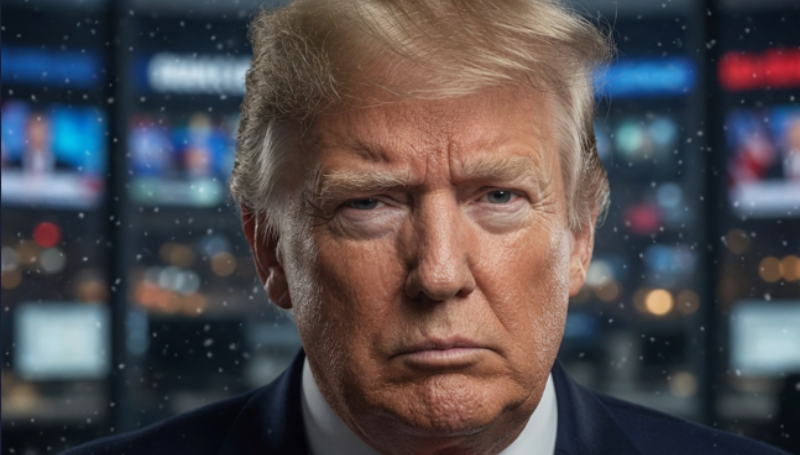
Lou Dobbs, one of cable news’ most recognizable and polarizing voices, has died at the age of 78, prompting an immediate and sharply divided reassessment of his legacy. For supporters, he stood as a steadfast defender of American workers and national sovereignty, unafraid to challenge economic globalization or criticize establishment institutions. For critics, he became a symbol of partisan media commentary, accused of amplifying misinformation and deepening political polarization in the United States.
His death on July 18, 2024, brings to a close a decades-long career that helped shape the evolution of televised business and political commentary. Born Louis Carl Dobbs in 1945 in Childress, Texas, he began his professional journey in radio broadcasting before moving into television news. His major break came in 1980 when he joined CNN at its founding, becoming one of the network’s original anchors during a formative period for 24-hour cable news.
At CNN, Dobbs gained prominence as the host of “Moneyline,” later rebranded as “Lou Dobbs Tonight.” The program was initially focused on business and financial reporting, offering analysis of Wall Street trends, corporate developments, and the broader economy. His straightforward delivery and focus on economic issues helped establish him as a trusted figure for many viewers seeking accessible financial news.
Over time, however, Dobbs’ editorial approach began to shift. By the early 2000s, his programming increasingly incorporated political commentary, particularly on immigration, trade policy, and job outsourcing. He framed these issues through the lens of American labor and economic security, arguing that globalization and lax border enforcement were harming middle-class workers. These positions resonated strongly with some audiences but also drew sustained criticism from media watchdogs, advocacy groups, and fellow journalists.
Controversy intensified as Dobbs faced accusations of promoting or giving airtime to unsubstantiated claims, including conspiracy theories related to former President Barack Obama’s citizenship. As tensions grew between his editorial stance and CNN’s corporate direction, the network ultimately parted ways with him in 2009.
Dobbs returned to television in 2011 when he joined Fox Business Network. There, “Lou Dobbs Tonight” became one of the network’s most prominent programs, particularly among conservative viewers. He emerged as a vocal supporter of Donald Trump, consistently backing the former president’s “America First” agenda and echoing themes of economic nationalism, immigration restriction, and skepticism toward global institutions.
Even after leaving Fox Business in 2021, Dobbs remained active in media through independent platforms, continuing to voice his opinions on political and economic developments. His supporters viewed him as a rare broadcaster willing to challenge mainstream narratives, while his critics argued that his influence contributed to increasing distrust in traditional media and democratic institutions.
Dobbs is survived by his wife, Debi, along with their family, including six children and grandchildren. His professional legacy remains deeply contested. To some, he was a pioneering television journalist who reshaped business news into a broader national conversation. To others, he represented the risks of blending opinion with reporting in an increasingly fragmented media landscape. His passing closes a significant chapter in cable news history, but the debates surrounding his work and impact are likely to continue.