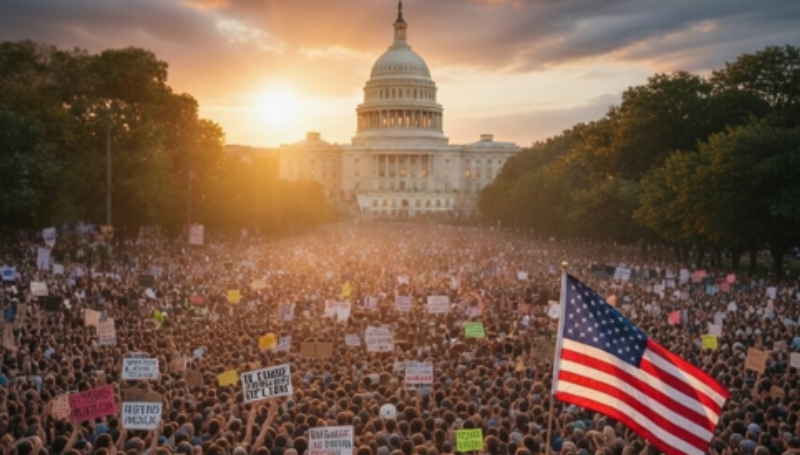
Millions of Americans took to the streets in a sweeping wave of coordinated demonstrations known as “No Kings,” marking one of the largest nationwide protest movements in recent history. More than 3,000 events were held across all 50 states, drawing participants from a wide range of communities and backgrounds. From major city centers to small towns, crowds gathered in parks, plazas, and public spaces to make their voices heard.
Organizers estimated that as many as 8 million people joined the protests, underscoring the scale and intensity of public engagement. Demonstrators carried signs, chanted slogans, and expressed deep concerns about the direction of national leadership and policy. Many participants said they were motivated by what they view as growing threats to democratic institutions and norms, as well as dissatisfaction with recent social and economic decisions.
The unifying message of the movement—“No Kings”—captured a shared sentiment among protesters: a rejection of concentrated or unchecked power. For many, the phrase symbolized a commitment to democratic principles, including accountability, equality under the law, and the idea that no leader should stand above the people they serve.While the vast majority of demonstrations remained peaceful and orderly, a small number of cities reported minor confrontations between protesters and law enforcement. These incidents were limited in scope and did not overshadow the broader message of the movement.For participants, the protests were more than a moment of dissent; they were a collective call to preserve democratic values and ensure that government remains responsive to the will of the people.