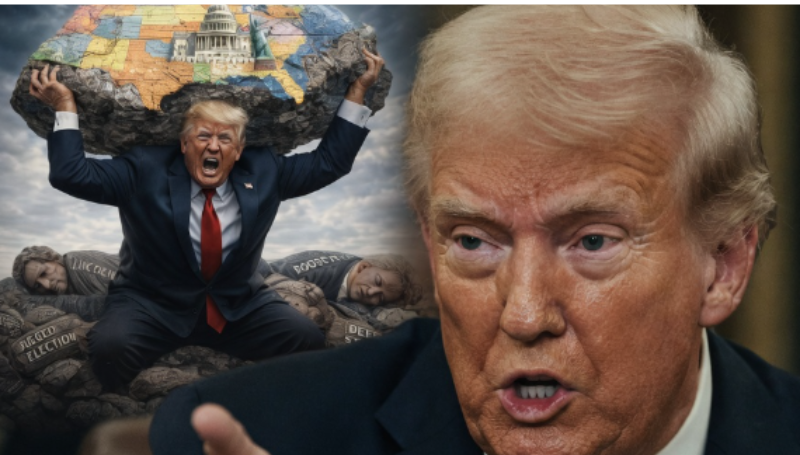
A recent statement attributed to Donald Trump claiming that the United States “wouldn’t be a country” without his leadership has triggered widespread debate across the political spectrum. Supporters argue that the remark reflects confidence and a belief that his policies and decisions had a defining impact on the nation during his presidency.
They interpret it as an expression of strong leadership and a way of emphasizing political influence rather than a literal assessment of constitutional survival. Critics, however, say the statement is exaggerated and misleading, arguing that the United States is sustained by institutions, laws, and democratic systems that function independently of any single leader. They view such rhetoric as political messaging that can deepen polarization and overshadow more substantive policy discussions. The comment has since circulated widely, becoming a focal point in ongoing debates about leadership, accountability, and the role of individual personalities in shaping national direction. Overall, reactions to the statement illustrate how political rhetoric can be interpreted in sharply different ways depending on perspective, reinforcing existing divisions while also highlighting broader questions about leadership, institutional strength, and how public figures shape narratives in a highly polarized media environment across the United States today and beyond ongoing discourse.