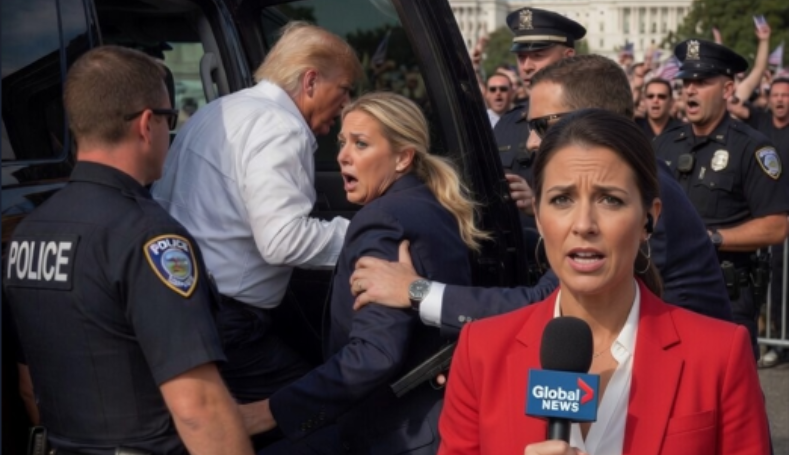
onfusion spread quickly across social media today after false claims began circulating alleging that former U.S. President Donald Trump had been “shot again” in Washington, D.C. The dramatic wording of the posts triggered immediate concern, with the rumor rapidly gaining traction across multiple platforms and prompting widespread speculation.
However, within hours, it became clear that there was no evidence to support the claim. No credible news organization, federal agency, or official security source has reported any such incident. The U.S. Secret Service, which is responsible for protecting former presidents, has not issued any statement confirming an attack or emergency situation. Likewise, major news outlets that routinely report significant national security events have not published anything verifying the rumor.
The false narrative appears to have originated from misleading social media posts, recycled or unrelated footage, and engagement-driven content designed to attract attention. In many cases, dramatic captions were shared without context or sourcing, allowing the claim to spread rapidly before it could be fact-checked.
Some of the confusion may also stem from past events. In 2024, Trump survived an assassination attempt at a rally in Butler, Pennsylvania, an incident that led to heightened security measures and ongoing investigations. However, authorities have confirmed that the current viral claims are entirely unrelated and have no factual basis.
Experts warn that misinformation involving high-profile political figures can spread quickly and cause unnecessary panic. Even false reports can overwhelm online discussions, create public anxiety, and weaken trust in reliable news sources.
At this time, all verified information confirms that Donald Trump has not been shot or harmed in any new incident in Washington, D.C., or elsewhere. Officials continue to urge the public to rely on trusted media outlets and official statements when evaluating breaking news.
This incident highlights how quickly misinformation can spread online and reinforces the importance of verifying information before sharing it.