According to a report published Monday by Just the News, the FBI has quietly initiated an investigation into a broad range of political and intelligence-related activities spanning nearly a decade. The reported inquiry focuses on issues tied to the Russia collusion narrative, as well as prosecutions led by Special Counsel Jack Smith, and may examine whether these events were part of a larger coordinated effort.
Citing unnamed sources within the administration, the outlet reported that the investigation could ultimately lead to the appointment of a special prosecutor. That prosecutor would be tasked with determining whether the episodes in question amount to an organized attempt to influence multiple U.S. elections in a way that favored Democratic candidates while harming former President Donald Trump.
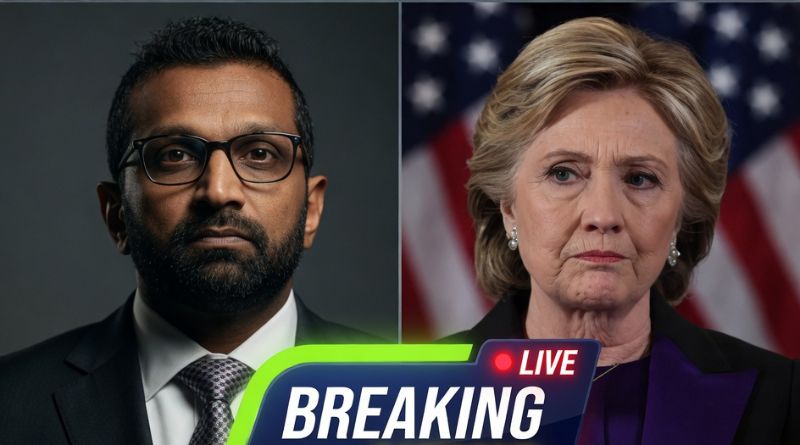
The investigation, described by sources as a “grand conspiracy” probe, was reportedly launched several weeks ago under the leadership of newly appointed FBI Director Kash Patel. Its scope could expand further if certain classified materials are declassified, an action that would require authorization from Trump. Sources familiar with the matter indicated that these materials may shed light on the origins of the alleged activities, possibly dating back to the summer of 2016.
One set of documents referenced in the report comes from a classified annex connected to a past inspector general review of Hillary Clinton’s use of a private email server. This annex was reportedly obtained at the request of Senate Judiciary Committee Chairman Chuck Grassley. According to the sources, it may contain information suggesting that the FBI failed to fully pursue or act upon credible allegations of misconduct during that investigation.
A second set of materials, described as “Clinton plan intelligence,” was noted in Special Counsel John Durham’s final report examining the origins of the Russia investigation. This information was also placed in a classified annex and has not been broadly disclosed to the public or to most members of Congress.
Separately, CIA Director John Ratcliffe has publicly criticized how intelligence agencies handled their assessment of Russian interference in the 2016 election. He specifically took issue with former CIA Director John Brennan’s role in supporting the inclusion of the Steele dossier—an opposition research document that has been widely contested—within official intelligence findings. Ratcliffe concluded that Brennan appeared to favor maintaining a consistent narrative rather than ensuring analytical accuracy.
Ratcliffe also shared his views on social media, describing the investigation into Trump as an “atypical and corrupt process” influenced by political pressures within the leadership of the CIA and FBI at the time.
If the classified annexes are eventually declassified, prosecutors could present them before a grand jury as part of an effort to demonstrate a broader pattern of conduct. According to the report, this could include allegations that officials selectively handled evidence, minimizing information that might have been damaging to Democrats while aggressively pursuing claims against Trump.
In addition to these matters, officials are also reportedly considering whether to investigate claims that China attempted to interfere in the 2020 election by generating fraudulent mail-in ballots in support of Joe Biden. The report states that the FBI received intelligence related to these allegations but did not pursue a full investigation and instead ordered the destruction of the materials. With the statute of limitations approaching, any potential legal action would face significant time constraints.
To address these timing challenges, investigators are said to be exploring a legal strategy that would treat multiple incidents as part of an ongoing conspiracy or racketeering enterprise. This approach could allow prosecutors to connect older and more recent actions into a single case.
Finally, the report noted that officials are considering alternative venues for potential legal proceedings. Rather than Washington, D.C.—where jury pools have historically leaned heavily Democratic—locations such as Florida are being discussed, particularly because some of the alleged actions occurred there and may still fall within the statute of limitations.