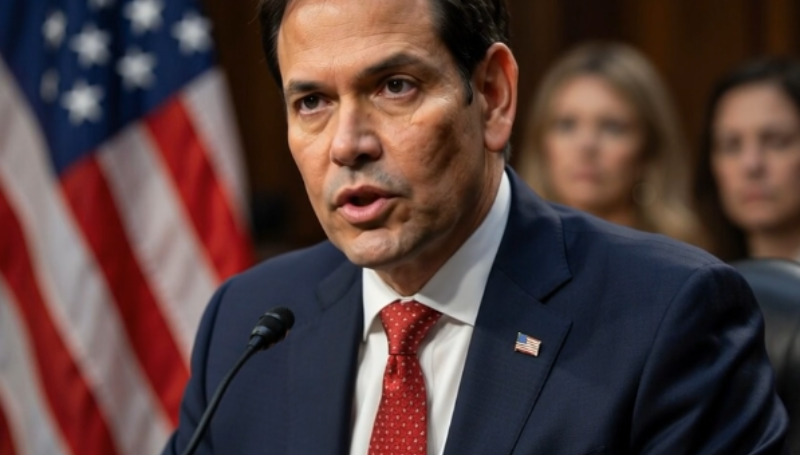
The United States has announced the revocation of visas for Brazilian Supreme Federal Court Justice Alexandre de Moraes, several of his judicial colleagues, and members of their immediate families, according to Secretary of State Marco Rubio. The decision was described by U.S. officials as a response to what they called politically motivated legal actions linked to the prosecution of former Brazilian President Jair Bolsonaro.
Rubio stated that the measure was intended to hold accountable foreign officials accused of restricting free expression and engaging in politically driven judicial conduct. He specifically criticized Justice de Moraes, alleging that his actions had contributed to a broad system of censorship and legal pressure that, according to the U.S. position, extended beyond Brazil and affected international speech rights. Reports suggest that the visa restrictions may apply to several members of Brazil’s highest court.
The announcement followed recent developments in Brazil, where the Supreme Federal Court intensified legal proceedings against Bolsonaro. The former president has faced search warrants, restrictions on contact with foreign officials, and monitoring measures, including the use of an ankle bracelet. Brazilian authorities have also imposed limits on his use of social media, citing concerns about potential flight risk. Bolsonaro, who is barred from running for office until 2030, has denied wrongdoing and argues the prosecution is politically driven.
Tensions between the United States and Brazil have reportedly increased in recent days, with additional pressure coming in the form of trade measures and tariff threats tied to concerns over free speech and judicial conduct.
On the same day, a separate diplomatic development occurred involving Venezuela and El Salvador. Ten U.S. citizens and permanent residents detained in Venezuela were released as part of a prisoner exchange. In return, more than 250 Venezuelan nationals held in El Salvador were repatriated. U.S. officials welcomed the release of the Americans, while the involved governments described the exchange as part of broader diplomatic negotiations and humanitarian arrangements.