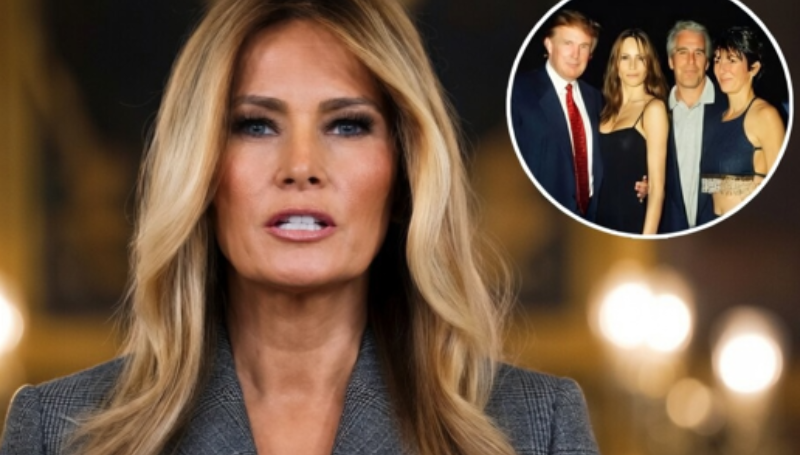
A statement released by Melania Trump has sparked widespread public attention and immediate controversy, reigniting discussion surrounding the long-running and highly sensitive case involving Jeffrey Epstein. The remarks, which addressed her past interactions and called for increased transparency, quickly became a flashpoint in an already emotionally charged national conversation.
In her statement, Melania Trump categorically denied any involvement in Epstein’s criminal activities and rejected any suggestion that she had been a victim of his abuse. She acknowledged that she had briefly encountered Epstein many years ago, but emphasized that the contact was limited and not connected to any wrongdoing. She also pushed back against what she described as misleading narratives linking her to the case, suggesting that some of the claims circulating in public discourse were driven more by political motivations than by verified evidence.
Beyond addressing her own name being associated with Epstein, she also urged lawmakers to take a broader step toward transparency. Specifically, she called on Congress to allow all survivors connected to Epstein’s crimes to provide testimony under oath in a public setting. According to her argument, such a process could help create an official and permanent historical record, reducing speculation and ensuring that the facts of the case are fully documented and accessible.
However, the response from survivors and advocacy groups was swift and deeply critical. Many individuals who have previously spoken out about Epstein’s abuse expressed renewed frustration and emotional exhaustion. For them, the statement did not represent a step toward clarity, but rather a reopening of painful experiences they have spent years trying to process and move beyond. Several survivors described the renewed attention as overwhelming, saying it forced them back into public scrutiny and emotional distress they had long sought to avoid.
In a coordinated response, a group of Epstein survivors reiterated that they have already participated in extensive investigations, provided sworn testimony, and repeatedly shared their experiences with authorities and the public. They emphasized that their accounts have been documented and that they have already endured significant personal and emotional costs as a result of coming forward.
Their central message was one of boundary-setting and fatigue. While acknowledging the importance of accountability and truth, they stressed that survivors should not be repeatedly required to relive traumatic events in order to satisfy ongoing public debate or political discussion. Instead, they argued that responsibility for continued scrutiny should fall on institutions, investigators, and individuals who failed to intervene or prevent abuse when warning signs first emerged.
The broader reaction to Melania Trump’s statement highlights a continuing tension between competing demands: the call for transparency, public testimony, and historical clarity on one hand, and the need to protect survivors from further emotional harm on the other. As debate continues, the issue remains deeply complex, reflecting not only legal and political questions but also profound human costs tied to trauma, memory, and justice.