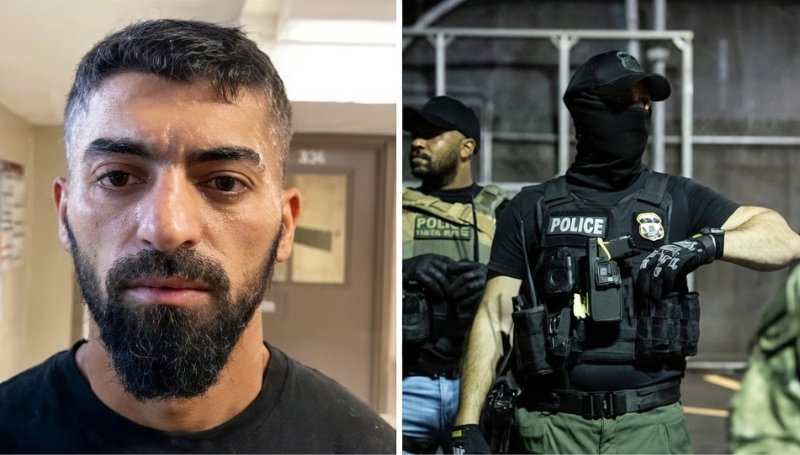
U.S. immigration authorities have released an Iranian national who had been detained during a multi-state enforcement operation in 2025, prompting renewed attention to both his case and the broader context in which it unfolded.
Ribvar Karimi was taken into custody in June 2025 by U.S. Immigration and Customs Enforcement as part of a coordinated operation spanning several states. According to reports, he was one of 12 Iranian nationals arrested in Locust Fork, a community in Blount County, Alabama. The operation was conducted under the oversight of the U.S. Department of Homeland Security, though specific details about the individual cases have remained limited.
Karimi has since been released from ICE custody, but key information about his situation remains unclear. Authorities have not publicly explained the conditions of his release or whether he continues to face immigration proceedings. It is also unknown whether his case involved visa violations, administrative detention, or other concerns that led to his initial arrest.
Before coming to the United States, Karimi reportedly served four years in the Iranian military. He later obtained a visa to enter the country, though the timeline and nature of his legal status have not been fully disclosed. His background has drawn some attention, but officials have not indicated that his military service alone was a determining factor in his detention.
The timing of his release comes amid ongoing tensions involving Iran, which have fueled public and political discussion. While there is no confirmed connection between Karimi’s case and international developments, the overlap has added to the scrutiny surrounding both immigration enforcement and foreign policy narratives.
At the same time, the White House has been addressing what it describes as misleading reporting related to U.S.–Iran relations. Karoline Leavitt criticized segments of the media for circulating claims about a supposed “10-point plan” proposed by Iranian officials and allegedly considered by the United States.
During a press briefing, Leavitt stated that the proposal was never taken seriously. She described it as “fundamentally unserious” and said it was immediately rejected by the administration. According to her, reports suggesting otherwise were inaccurate and created confusion about the U.S. position.
White House Communications Director Steven Cheung also responded publicly, disputing claims shared on social media. His comments were directed in part at Owen Jones, who had referenced the alleged plan based on Iranian state media sources. U.S. officials have maintained that the information lacked independent verification and should not be treated as credible.
Overall, the situation reflects two parallel issues: the limited transparency often surrounding immigration enforcement cases and the challenges of navigating conflicting narratives in international affairs. Karimi’s release leaves open questions about his legal status and the reasoning behind his detention, while the administration’s response highlights its efforts to counter what it sees as misinformation in a complex geopolitical environment.