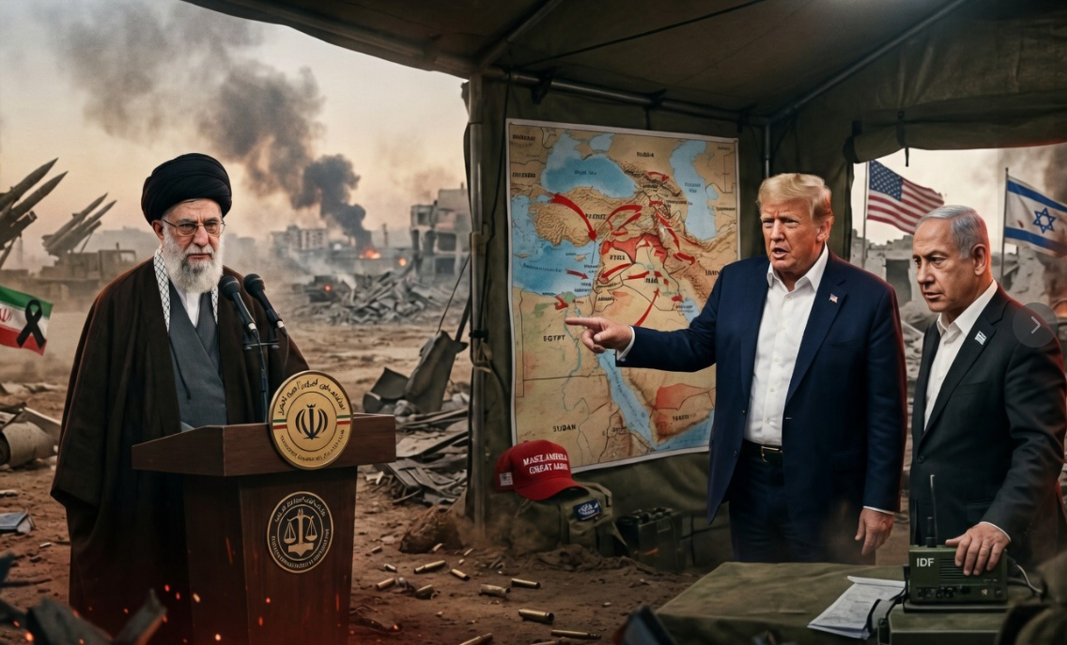
Recent reports have raised concerns about renewed attacks on Israel, though much of the information circulating online is fragmented or exaggerated. Sensational claims, such as “Iran will strike America tonight,” have fueled fear, yet verified news shows that the situation, while serious, is part of a complex and ongoing conflict rather than a sudden, isolated assault.
The escalation began in 2025, when tensions between Israel and Iran, along with Iran’s regional allies, intensified dramatically. Israel carried out significant strikes against Iranian targets, including nuclear facilities, missile sites, and military infrastructure. In retaliation, Iran launched ballistic missiles toward Israeli cities. At the same time, Hezbollah in Lebanon and Houthi forces from Yemen contributed with rocket and drone attacks. This period marked one of the most intense direct confrontations in recent years, demonstrating the high stakes of the regional rivalry.
As 2026 began, the conflict showed no signs of slowing. Joint operations by the U.S. and Israel targeted additional Iranian assets, prompting further Iranian missile strikes on Israel. Recent reports describe attacks on cities including Haifa, where residential buildings were damaged or partially collapsed, causing civilian casualties. Missile fire was also reported near Tel Aviv and other central regions, with Israel’s air defense systems intercepting many projectiles, though some still caused damage and disruption.
The hostilities occur across multiple fronts. Direct missile attacks from Iran continue alongside Hezbollah rocket fire from the north and occasional Houthi attacks from the south. Israel has responded with precision airstrikes designed to degrade enemy capabilities while prioritizing civilian protection through robust defense measures like the Iron Dome system. These measures aim to minimize casualties and maintain critical infrastructure despite ongoing assaults.
The root causes of the conflict lie in long-standing geopolitical rivalries, security concerns, and proxy warfare. While social media often amplifies fears through dramatic or misleading claims, the actual situation reflects a continuous cycle of strikes and counterstrikes. Each action provokes retaliation, and the pattern has persisted for months rather than erupting suddenly.
International observers are closely monitoring the developments, stressing the importance of diplomacy to prevent further civilian suffering and broader regional instability. Efforts to de-escalate tensions have so far been limited, and the coming weeks are expected to be crucial in determining whether negotiations or military responses will shape the next phase of the conflict.
In summary, Israel is currently experiencing attacks as part of a broader confrontation with Iran and allied groups. Civilian areas have been affected, particularly in Haifa and central Israel, but these incidents are part of a larger, ongoing cycle of military action rather than an isolated, surprise assault. The situation remains volatile, and international attention is focused on preventing further escalation and protecting civilians.