In a significant and unanimous ruling, the Supreme Court of the United States has allowed a civil rights lawsuit filed by Gabriel Olivier to proceed against the city of Brandon, Mississippi. The decision represents an important moment in the ongoing debate over the limits of local regulations and the protection of constitutional freedoms, particularly those tied to free speech and religious expression.
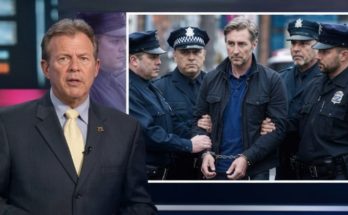
The dispute began in 2021 when Olivier was arrested while preaching near a suburban amphitheater. City officials claimed he had violated a local ordinance that restricts demonstrations to designated protest zones. According to authorities, the rule was designed to manage crowds and maintain public order. Olivier, however, argued that the ordinance unfairly limited his First Amendment rights by preventing him from sharing his religious beliefs in a public space.
Initially, lower courts refused to allow his civil lawsuit to move forward. They relied on his prior criminal conviction related to the arrest, citing a legal doctrine that often prevents individuals from using civil litigation to challenge the validity of a conviction that has not been overturned. This principle is rooted in the Supreme Court’s earlier decision in Heck v. Humphrey, which generally bars such claims.
The Supreme Court, however, took a different view. Writing for the Court, Elena Kagan explained that Olivier’s lawsuit is not an attempt to undo his past conviction. Instead, it seeks a forward-looking remedy—specifically, an injunction that would prevent the city from enforcing the ordinance against him in the future. Because the lawsuit focuses on preventing future harm rather than revisiting past legal outcomes, the Court determined that the Heck precedent does not apply in this situation.
Kagan emphasized that Olivier’s goal is to return to the amphitheater and continue preaching without facing the threat of another arrest. By framing his case in this way, he is asking the courts to safeguard his constitutional rights going forward, not to relitigate what has already been decided.
The ruling has been widely praised by advocates for religious liberty and free expression. Kelly Shackelford of First Liberty Institute and Allyson Ho of Gibson Dunn both welcomed the decision, arguing that it reinforces the right of individuals to express their faith openly in public spaces without undue government interference.
At the same time, the city of Brandon continues to defend its ordinance, maintaining that it is content-neutral and applies equally to all forms of expression. Officials argue that the regulation is necessary to ensure safety and order at public venues.
Importantly, the Supreme Court’s decision does not resolve the underlying constitutional question. Instead, it clears the way for Olivier’s case to be heard fully in lower courts. More broadly, the ruling underscores that individuals are not automatically barred from seeking judicial relief simply because they have a prior conviction, especially when they are aiming to prevent future violations of their fundamental rights.