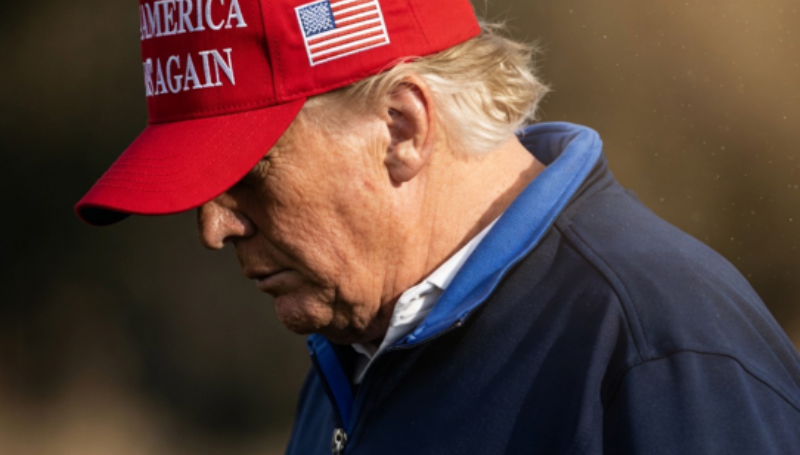
The political atmosphere in Washington, D.C., has grown increasingly tense as discussions emerge about potential shifts in leadership within the Federal Bureau of Investigation and the broader direction of federal law enforcement under former President Donald Trump’s renewed influence. Among the figures drawing significant attention is Dan Bongino, a former Secret Service agent turned conservative media personality, whose name has circulated in conversations about possible high-ranking roles within the federal government.
Bongino rose to prominence after transitioning from federal service to broadcasting, where he built a substantial following through his podcast and television appearances. As host of “The Dan Bongino Show,” he has consistently voiced sharp criticism of institutions such as the FBI and the Department of Justice, frequently alleging political bias and a lack of accountability within their ranks. His arguments have resonated strongly with conservative audiences who believe that elements of the federal bureaucracy have acted beyond their intended mandate in recent years.
Supporters argue that Bongino’s combination of law enforcement experience and outsider perspective could position him as a reform-minded figure capable of addressing long-standing concerns about transparency and trust. They see his potential involvement in federal leadership as an opportunity to challenge entrenched institutional norms and restore public confidence in agencies that have faced mounting scrutiny. To them, his willingness to confront controversial issues signals a break from what they view as a culture of internal protection and limited accountability.
Critics, however, caution that appointing a figure so closely associated with partisan commentary to a senior law enforcement position could undermine the perceived neutrality of federal institutions. They argue that the FBI’s credibility depends heavily on its independence from political pressure, and that introducing a politically outspoken figure into its upper ranks risks blurring the line between governance and impartial investigation. Legal experts and former officials have emphasized that maintaining public trust requires strict adherence to nonpartisan principles, particularly in an era marked by deep political divisions.
These concerns are amplified by the broader context of recent high-profile investigations, including those related to the 2016 election and the January 6, 2021, attack on the U.S. Capitol. Individuals involved in those inquiries, especially members of the House January 6th Committee, have defended their work as grounded in law and fact. Meanwhile, critics continue to challenge the motivations and conclusions of those investigations, arguing that they reflect political bias. The resulting divide underscores the difficulty of separating legal processes from political interpretation in today’s climate.
Adding another layer of complexity are ongoing debates about the scope of presidential authority, particularly regarding the use of pardons. While discussions of hypothetical or preemptive pardons for public officials remain largely speculative, they have prompted constitutional scholars to examine the limits of executive power. Such questions, if ever formally tested, would likely require judicial review and could have lasting implications for the balance of power within the federal government.
If someone like Bongino were to assume a senior leadership role within the FBI, observers suggest the impact could be significant. Potential initiatives might include internal reviews of past investigations, new guidelines aimed at addressing perceived bias, and increased scrutiny of decisions made by prior leadership. Supporters view these possibilities as necessary steps toward reform, while critics warn they could be interpreted as politically motivated actions if not handled with clear transparency and adherence to legal standards.
At the heart of the debate lies the institutional identity of the FBI. For decades, the bureau has worked to cultivate an image of impartiality, even as it has navigated politically sensitive cases. Any major leadership shift—particularly one involving a figure known for strong political views—would test that identity and could reshape how the agency is perceived both domestically and internationally.
As these discussions continue to unfold, they highlight broader questions about accountability, governance, and public trust in a polarized era. Supporters of reform emphasize the need for greater oversight and responsiveness within federal institutions, while critics stress the importance of preserving the independence that underpins the rule of law. Ultimately, the future direction of agencies like the FBI will depend not only on leadership decisions but also on how those decisions are implemented and received across the political spectrum.