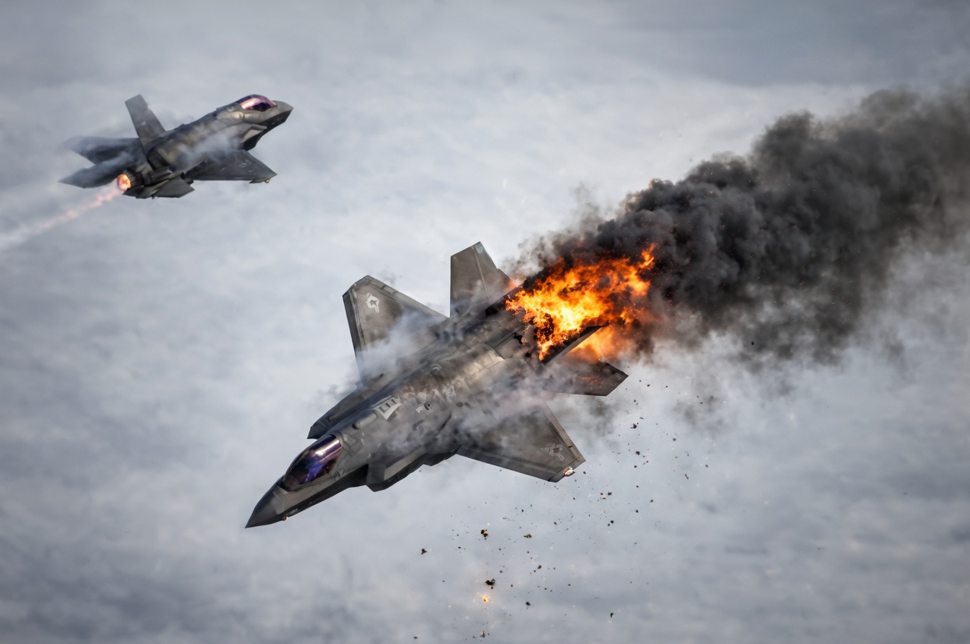
In early 2026, reports of escalating military activity in the Middle East captured global attention, as missile and drone strikes were said to have targeted U.S. military facilities across the Gulf region, including key installations in Kuwait and Bahrain. These developments were widely interpreted as part of a rapidly intensifying confrontation involving Iran, the United States, Israel, and several regional allies, raising fears of a broader conflict with far-reaching consequences.
According to multiple accounts, the crisis began on February 28, 2026, when U.S. and Israeli forces carried out coordinated air and missile strikes on sites داخل Iran. Officials described the operation as a response to ongoing security concerns, including Iran’s military capabilities and regional activities. Tehran, however, condemned the strikes as a direct violation of its sovereignty and quickly signaled its intent to retaliate.
Within hours, Iran reportedly launched waves of ballistic missiles and unmanned aerial systems aimed at U.S.-linked facilities across the Gulf. Kuwait and Bahrain became key focal points due to their strategic importance as hosts of American military infrastructure. Reports indicated that helicopter support facilities, fuel depots, and command centers in Kuwait were struck, while Bahrain experienced both direct threats and falling debris from intercepted projectiles.
Although authorities confirmed infrastructure damage and operational disruptions, full details regarding casualties remained unclear. Eyewitness accounts and circulating footage showed smoke rising from military compounds and emergency crews responding to fires and structural damage, underscoring the immediate impact on both military personnel and nearby civilian areas.
Analysts say the الأحداث highlight the evolving nature of modern warfare, where relatively low-cost drones and missiles can challenge advanced defense systems and extend the reach of adversaries. This shift complicates traditional deterrence and increases the risk of rapid escalation across multiple domains, including airspace, cyber networks, and maritime routes.
Regional governments condemned the attacks but largely avoided direct involvement, focusing instead on defense and diplomacy. Meanwhile, global concerns intensified over energy security, particularly the stability of the Strait of Hormuz, a critical النفط corridor.
As tensions continued into April 2026, uncertainty remained high. Experts emphasized that diplomatic engagement would be essential to prevent further escalation and mitigate the broader geopolitical and economic consequences of the crisis.