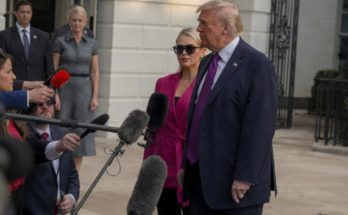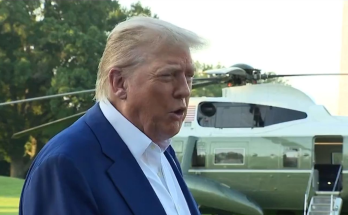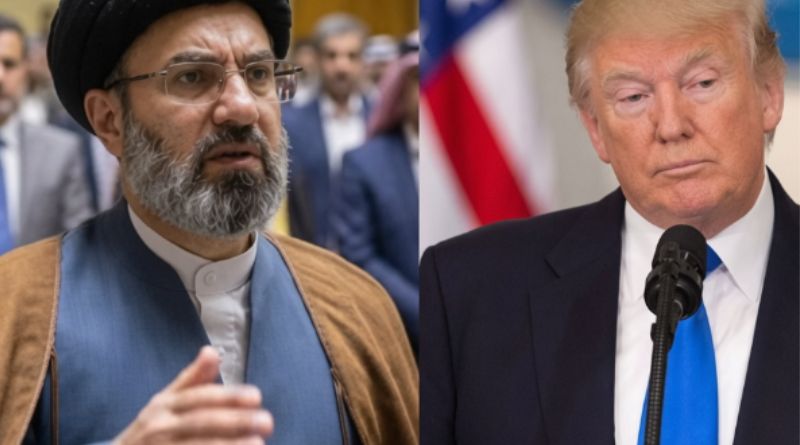
President Donald Trump and senior members of his administration are reportedly working to finalize the framework of a potential agreement aimed at ending the conflict with Iran, with negotiations continuing through diplomatic channels in Qatar.
Secretary of State Marco Rubio reaffirmed the administration’s position that the Strait of Hormuz must be reopened, calling its closure unacceptable for global commerce. Speaking during a visit to India, Rubio said, “The straits have to be open, they’re going to be open,” adding that the situation is “unlawful, illegal, unsustainable for the world, and unacceptable.”
Rubio confirmed that discussions were taking place in Qatar and said negotiators were focused on refining the wording of an initial agreement. According to Rubio, President Trump remains committed to securing what he described as either “a good deal or no deal,” while acknowledging that finalizing the document could take several more days.
As diplomatic efforts continued, U.S. Central Command announced that American forces carried out what it described as “self-defense strikes” in southern Iran on Monday. According to Capt. Tim Hawkins, the operation targeted missile launch sites and Iranian vessels allegedly attempting to deploy naval mines near strategic waterways. Hawkins said the strikes were intended to protect U.S. forces while maintaining restraint during the ongoing cease-fire.
A senior U.S. military official said some American aircraft and naval vessels operating near the Gulf of Oman and Arabian Sea had been threatened by Iranian surface-to-air missile systems. The official added that the strikes occurred near the Iranian port and naval base at Bandar Abbas.
Despite these military incidents, negotiations continued in Qatar, where Iranian officials met with U.S. representatives to discuss a broader settlement. Iranian Foreign Ministry spokesperson Esmaeil Baqaei said Tehran and Washington had reached understandings on many issues but cautioned that a final agreement was not yet within reach. He also accused the United States of changing its positions during the talks.
President Trump stated that any agreement reached with Iran would be “good and proper,” while criticizing the 2015 nuclear agreement negotiated under former President Barack Obama. Trump argued that the earlier deal provided Iran with significant financial benefits while failing to permanently prevent nuclear weapons development.
According to a senior administration official, negotiators have made progress on key elements of a possible agreement. The reported framework would require Iran to eliminate its stockpile of highly enriched uranium, reopen the Strait of Hormuz, and commit to significant restrictions on future uranium enrichment. In exchange, the United States would lift its naval blockade and gradually ease economic sanctions.
The official said most major issues have been resolved in principle, although technical details and enforcement mechanisms remain under discussion. One of Washington’s primary objectives is securing a long-term, verifiable commitment preventing Iran from enriching uranium beyond agreed limits, with enforcement provisions viewed as more important than the specific duration of the restrictions.
Administration officials also believe Iran has become more willing to negotiate following recent military operations. If completed, the proposed agreement would reportedly impose stricter limitations on Iran’s nuclear program than those included in the 2015 nuclear deal, reflecting the Trump administration’s goal of establishing a more comprehensive and enforceable framework.