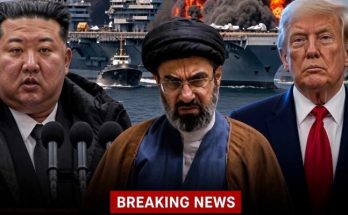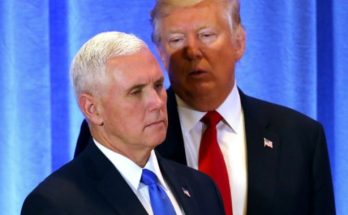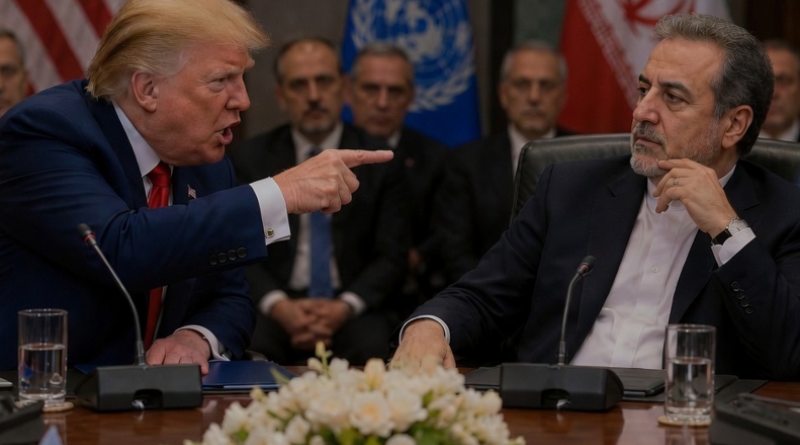
Former U.S. President Donald Trump has stirred international debate after declaring that Iran should “wave the white flag of surrender” amid rising tensions and continuing instability in the Middle East. His comments came during remarks delivered at the White House, where he spoke about the ongoing regional conflict and the current state of U.S.-Iran relations.
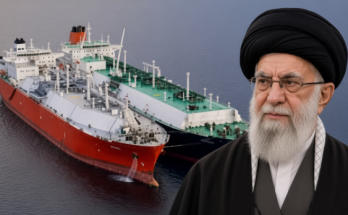
Trump claimed that Iran’s military strength had been significantly reduced and argued that the country was struggling under growing political and economic pressure. According to his statements, Iranian leaders may be publicly projecting resistance while privately seeking a path toward negotiations. He also praised recent U.S. strategies targeting Iranian trade and maritime activity, describing those actions as successful in weakening Tehran’s position.
The former president further stated that Iran is “not in a position to fight,” a remark that immediately drew attention from political leaders, foreign policy experts, and international media outlets. His comments arrive during a delicate period marked by ceasefire discussions, military operations in the region, and intense diplomatic efforts aimed at preventing wider conflict.
Analysts around the world responded cautiously to Trump’s claims, emphasizing that assessments of military capability and political intent are often disputed during times of crisis. Experts warned that statements made by political figures involved in or commenting on international conflicts should be carefully examined and independently verified whenever possible.
The situation involving Iran continues to remain highly sensitive, with governments across the globe closely monitoring developments. Many world leaders have urged restraint and diplomacy to avoid further escalation that could destabilize the region even more. Observers note that tensions involving Iran, the United States, and neighboring countries have the potential to affect global energy markets, international security, and broader geopolitical stability.
Trump’s remarks have also generated strong reactions online, with supporters praising his hardline stance while critics argued that such rhetoric could increase tensions during an already volatile moment. As diplomatic talks and regional negotiations continue, uncertainty remains over how the situation will evolve in the coming weeks.
Disclaimer:
This article is intended for informational and news-reporting purposes only. Statements attributed to political figures reflect publicly reported comments and should not be interpreted as verified fact. Claims related to military strength, political strategy, or diplomatic intentions may differ across sources and remain subject to independent confirmation. Any AI-generated imagery referenced is for illustrative purposes only and does not represent real-time events.