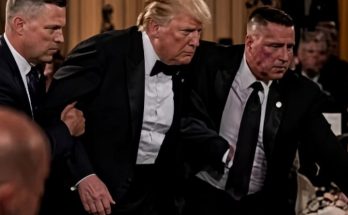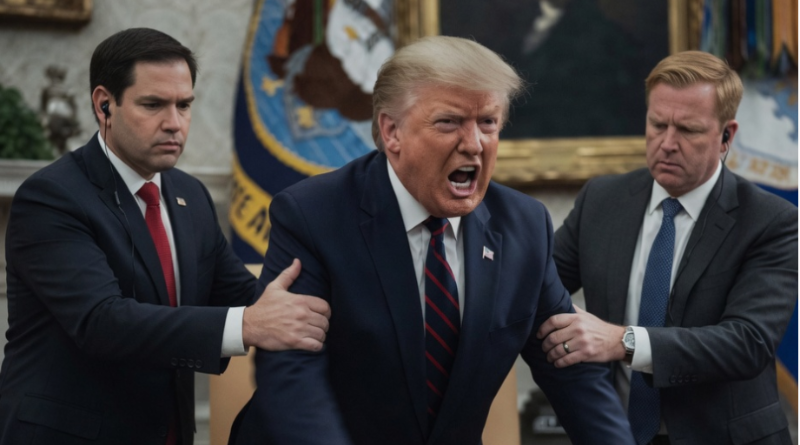
The Wall Street Journal, owned by Rupert Murdoch—one of Donald Trump’s closest media allies—has published one of the most damning portraits of a president in crisis in recent memory. According to senior administration officials, when Trump learned that two American airmen were missing after their F-15E was shot down over Iran, he entered a “frenzied state” lasting hours. His reaction disrupted the crisis response so severely that aides physically removed him from the Situation Room, briefing him only intermittently.
During the rescue operation, Trump reportedly “wailed throughout a nearly empty West Wing,” preoccupied with gas prices and European allies who refused to join his potential military response. His main concern, officials said, was not the pilots’ safety but his own political future. He feared repeating the mistakes of Jimmy Carter, telling advisers in March, “If you look at what happened with Jimmy Carter… with the helicopters and the hostages, it cost them the election. What a mess.”
The pilots were rescued—one immediately and the other two days later. On Easter Sunday, Trump posted a profanity-laced message on Truth Social threatening Iran and signing it, “Praise be to Allah. President DONALD J. TRUMP.” When advisers expressed alarm, he explained he intended to appear “unstable and insulting” to pressure Iran—but then immediately asked, “How’s it playing?”
The episode reflects a pattern of impulsive behavior. Trump later posted that “a whole civilization will die tonight,” then backtracked multiple times, declaring Iran had agreed to his terms, only for an Iranian Revolutionary Guard ship to fire on a tanker less than 12 hours later.
Even the Wall Street Journal, a long-time ally, highlighted a president removed from crisis management, obsessed with optics while American lives were at risk. Fifty-one lawmakers have proposed invoking the 25th Amendment, and public criticism continues to mount. The situation raises urgent questions about leadership, judgment, and the country’s safety under Trump.