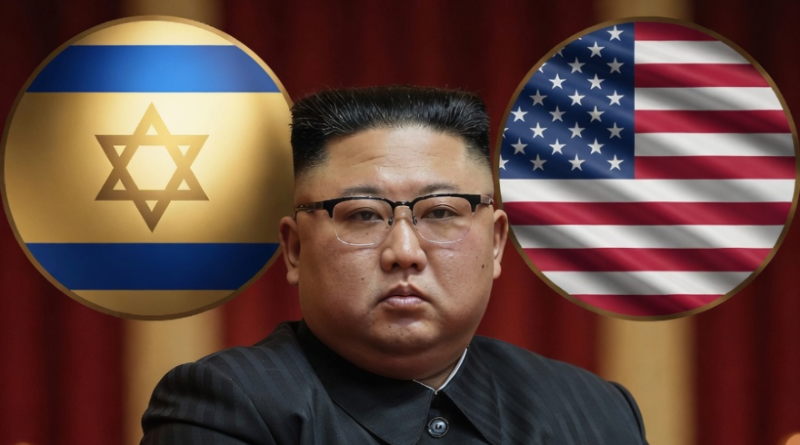
North Korean leader Kim Jong Un has delivered a sharp condemnation of Israel, describing the country not as a legitimate state but as a “terror project” supported by the United States. The statement, reported by North Korea’s state-run media, accused Washington of using Israel to advance American strategic interests in the Middle East. Kim also reiterated that Pyongyang does not recognize Israel as a sovereign nation, a stance that has been consistent in North Korean foreign policy for decades.
The remarks highlight North Korea’s long-standing alignment with Palestinian causes and its broader opposition to U.S. influence around the world. North Korean officials have historically framed Israeli military actions as part of what they call imperialist power politics, arguing that such actions serve the strategic objectives of the United States rather than the security or stability of the region. Pyongyang’s rhetoric often positions North Korea as a defender of nations and peoples who resist U.S.-led interventions, reinforcing its image as a critic of Western influence in global affairs.
This latest statement comes amid ongoing regional tensions and international debates over the Israeli-Palestinian conflict. While North Korea remains geographically distant from the Middle East, its leadership frequently uses the issue to signal ideological alignment with countries and groups that oppose U.S. policies. Kim’s comments also serve to reinforce domestic messaging, projecting an image of principled opposition to perceived global injustice and imperialism.
Analysts note that North Korea’s statements rarely indicate direct policy changes or new alliances but are often intended to assert the country’s diplomatic posture and ideological consistency. By denouncing Israel in such forceful terms, Kim Jong Un reinforces Pyongyang’s longstanding foreign policy themes, which include solidarity with nations resisting U.S. influence, criticism of perceived Western interventionism, and support for causes framed as anti-imperialist.
The international reaction to North Korea’s rhetoric is generally cautious. While the country’s statements receive media attention, they seldom translate into immediate geopolitical consequences, particularly in regions outside East Asia. However, such comments contribute to the ongoing perception of North Korea as a country willing to use extreme language to assert its positions on global issues, often amplifying tensions in already sensitive geopolitical discussions.
Overall, Kim Jong Un’s statement reflects Pyongyang’s strategic use of international messaging. It underscores North Korea’s continued rejection of U.S.-backed policies, its ideological support for the Palestinian cause, and its readiness to use strong rhetoric to assert its views on global affairs.