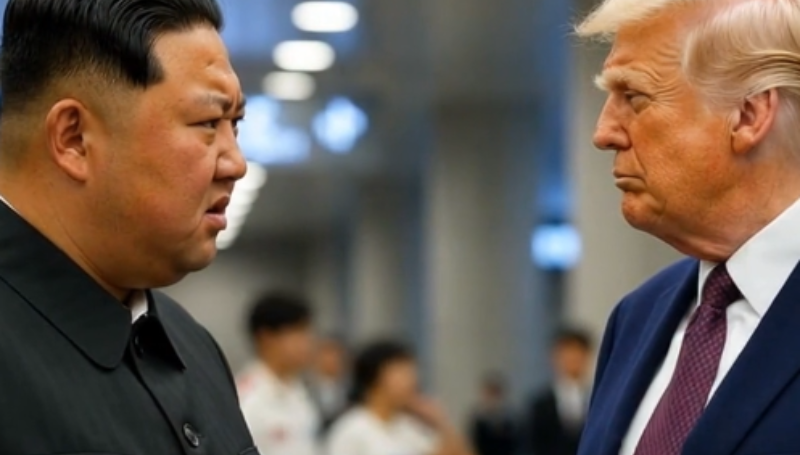
Amid rising tensions in the Middle East, reports circulating online claim that North Korean leader Kim Jong Un has delivered a stern warning regarding the safety of North Korean citizens currently living in Iran. According to the widely shared statement, Kim declared that there could be “no compromise” when it comes to protecting and bringing home his citizens safely. He allegedly warned that if even one North Korean citizen were harmed during the ongoing conflict, North Korea would be prepared to enter the war “without hesitation.”
The statement quickly gained traction across social media platforms, where users reacted with a mixture of concern, disbelief, and humor. Many interpreted the remarks as another sign of the growing instability surrounding the conflict involving Iran and Israel. Others questioned whether the quote was authentic, noting that no major international news organizations or verified North Korean state outlets had officially confirmed the exact wording being shared online. Despite the uncertainty surrounding the source, the viral nature of the claim has fueled widespread discussion about what a deeper North Korean involvement in the region could mean for global security.
North Korea has historically maintained close diplomatic and military ties with Iran, particularly through cooperation involving defense technology and mutual opposition to Western influence. Over the years, Pyongyang has repeatedly criticized the United States and its allies over policies in the Middle East. Because of this relationship, speculation about North Korea taking a stronger stance during regional conflicts often gains significant international attention. Analysts, however, caution that rhetoric and direct military action are very different matters.
The current situation in the Middle East has already placed governments around the world on alert. Concerns continue to grow over the possibility of broader escalation involving additional nations or armed groups. International observers fear that aggressive public statements—whether officially verified or not—can further inflame tensions and contribute to uncertainty across global markets, diplomacy, and security planning. Several countries have already urged restraint while emphasizing the importance of protecting civilians caught in the conflict zone.
Online reactions to the alleged statement have ranged from serious geopolitical debate to viral memes. One popular response jokingly summarized the situation by saying, “Bro doesn’t want peace, bro wants problems.” The phrase spread rapidly as users mocked the dramatic tone of the reported warning. While many treated the statement humorously, others pointed out that even rumors involving nuclear-armed states can have real-world consequences by increasing fear and misinformation during already volatile situations.
At this stage, the authenticity of the reported quote remains unclear. Without confirmation from reliable international sources or official North Korean communications, experts advise caution before accepting the statement as fact. Still, the rapid spread of the claim highlights how quickly unverified information can dominate global conversations during times of international crisis. As tensions between Iran and Israel continue to evolve, governments, media organizations, and citizens alike remain focused on the possibility of further escalation and its potential impact on global stability.