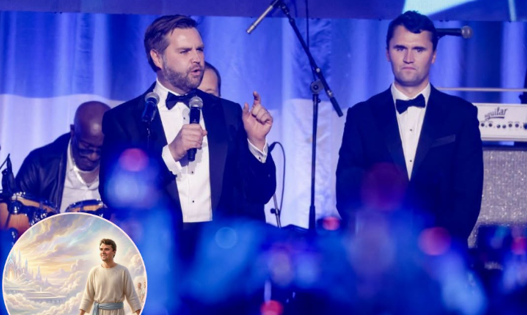
Before Charlie Kirk became a symbol of the conservative movement, he was JD Vance’s friend.
That distinction mattered to Vice President JD Vance when Kirk was killed on September 10, 2025, during a Turning Point USA event at Utah Valley University in Utah. One year later, the political movement Kirk helped build continues to carry his name, but for Vance, the loss has always been more personal than political.
Kirk was not simply a conservative activist Vance occasionally appeared alongside. He was someone Vance called when he was uncertain about his future, someone who introduced him to influential people, someone who checked on his family during difficult moments and, ultimately, someone Vance described as a “true friend.”

Their story began in 2017, before either man occupied the position he would eventually hold in American politics.
At the time, Vance was best known as the author of Hillbilly Elegy and was working outside elected politics. Kirk was already building Turning Point USA into a powerful conservative organization focused heavily on young Americans.
According to Vance, the two first connected after Vance appeared on Tucker Carlson’s Fox News program. Kirk sent him a direct message afterward, telling him he had done a good job. Vance later recalled that he barely knew Kirk’s name at the time.
That brief message became the beginning of an eight-year friendship.
What followed was far more consequential than either man could have known.
When Vance began seriously considering a run for the U.S. Senate in 2021, Kirk was among the first people he contacted. Vance was interested in running but remained uncertain about whether he could actually build a viable campaign.
Kirk helped change that.
Vance said Kirk introduced him to people in his political network, including Donald Trump Jr., and helped connect him with people who would eventually become involved in his campaign. Kirk also gave Vance opportunities to appear at Turning Point events, helping introduce the relatively new political candidate to a broader conservative audience.
That support became increasingly important as Vance moved from being a political newcomer to one of the most recognizable figures in the Republican Party.
But Vance’s tribute after Kirk’s death made clear that their relationship was never limited to politics.
In a lengthy message posted after the shooting, Vance called Kirk “a true friend” and described him as the kind of person who could be trusted with something said in confidence.
He also revealed something that offered a more intimate look at their friendship.
Kirk did not only talk to Vance about elections, candidates or political strategy. He checked on Vance’s family. He called and texted. He offered guidance and prayers. Their conversations extended into Christianity, family, sports, policy and ordinary life.
Vance described group chats they shared with people Kirk had introduced to him over the years. They celebrated weddings and births together, mourned losses and argued about politics.

In other words, the relationship had become part of everyday life.
That may be why Kirk’s death appeared to hit Vance so deeply.
On the day of the shooting, Vance said he spent much of the following hour praying for his friend. He later acknowledged the painful reality that those prayers did not result in Kirk’s survival, writing that he believed God had other plans.
The vice president’s actions in the days that followed also demonstrated the depth of that personal connection.
Rather than treating Kirk’s death only as the loss of an influential political ally, Vance changed his plans and traveled to Utah with Second Lady Usha Vance to be with Kirk’s family. He also helped bring Kirk’s remains and family back to Arizona aboard Air Force Two.
Then came another extraordinary moment.
Just days after Kirk’s death, Vance hosted The Charlie Kirk Show from the White House complex.
Standing behind a microphone in the Eisenhower Executive Office Building, Vance acknowledged that he was attempting to fill in for someone who could not be replaced. He described the experience as difficult and said he was doing his best to honor his friend.
The gesture showed just how quickly personal grief and public responsibility had become intertwined.
At Kirk’s memorial service in Arizona on September 21, 2025, Vance again spoke about him not simply as a political figure but as a friend. He framed Kirk’s death through the language of faith and described the gathering as a celebration of Kirk and his Christian beliefs. More than 63,000 people attended the memorial, according to Reuters.
For Vance, Kirk’s influence also extended beyond his own political career.
In his original tribute, Vance credited Kirk’s ability to organize and connect people with helping the broader Trump movement. He argued that Kirk had contributed not only to the Republican victory in 2024 but also to the process of finding and connecting people who would eventually work in the administration.
That is one reason Kirk’s absence continues to matter politically.
But one year later, the most revealing part of their story may not be what Kirk did for Vance politically.

It may be what he meant to Vance personally.
Kirk knew Vance before he became a senator.
He knew him before he became Donald Trump’s running mate.
He knew him before he became vice president.
And Vance knew Kirk before the activist became one of the most recognizable faces of the American conservative movement.
Their friendship began with a simple message on social media.
It grew through political campaigns, family milestones, religious conversations and countless private exchanges.
Then, in a single afternoon in September 2025, it ended.
A year later, Kirk’s organization continues operating, his ideas remain part of political debates and his name remains deeply connected to the conservative movement he helped build. Turning Point USA has continued expanding under the leadership of his widow, Erika Kirk, while the organization faces the difficult task of preserving a movement built around a uniquely influential founder.
For JD Vance, however, Charlie Kirk’s legacy cannot be reduced to political influence.
He was the friend who reached out when Vance was still an outsider.
The friend who encouraged him when a Senate campaign seemed uncertain.
The friend who introduced him to people who would become important in his political future.
The friend who checked on his family.
And the friend whose death left a silence that politics could never completely fill.
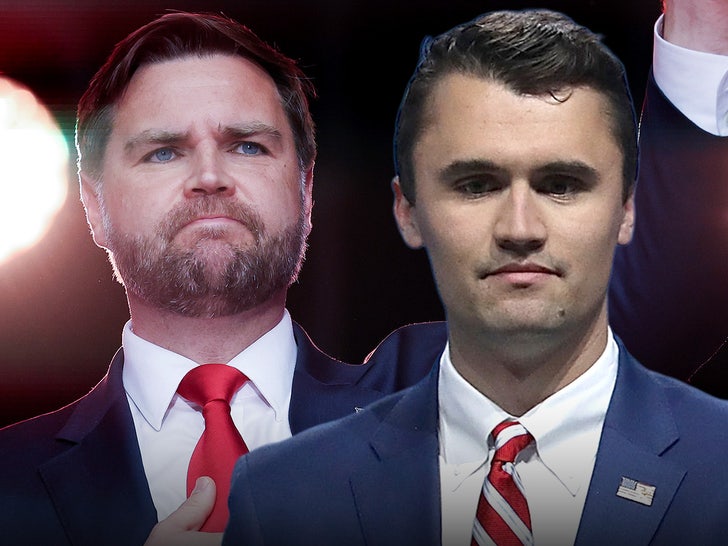
One year later, JD Vance may still speak about Charlie Kirk as a political ally, a Christian conservative and an important figure in the movement.
But beneath all of those descriptions is something much simpler.
He was his friend.
And perhaps that is the part of Charlie Kirk’s story that Vance will carry with him the longest.