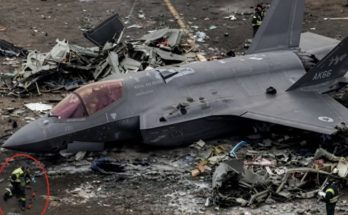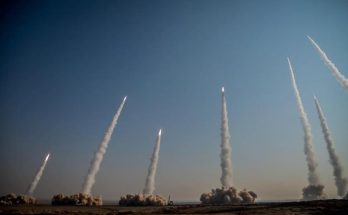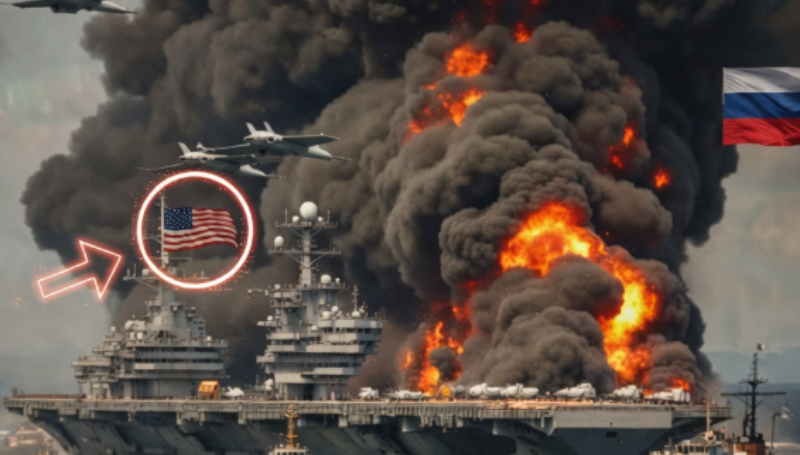
Unconfirmed and highly sensational claims have circulated online alleging that a Russian Su-57 stealth fighter may have struck a U.S. aircraft carrier allegedly carrying a large cargo of military equipment, including hundreds of tanks. According to these unverified reports, the attack was described as sudden and highly precise, supposedly bypassing the carrier’s layered defensive systems and resulting in significant destruction.
At present, there is no official confirmation from either the U.S. Department of Defense or Russian authorities regarding any such incident. No credible defense reporting or independently verified intelligence supports the existence of this event. Military analysts and defense observers have therefore expressed strong skepticism, stressing that claims of this magnitude would be extremely difficult to conceal, misrepresent, or fail to corroborate across multiple global monitoring systems.
U.S. aircraft carriers operate as part of highly sophisticated carrier strike groups, which include destroyers, cruisers, submarines, and advanced airborne surveillance platforms. These systems are designed to detect and counter a wide range of threats, including stealth aircraft, long-range missiles, and coordinated attacks. Because of this layered defense architecture, experts caution that the idea of a single fighter aircraft overwhelming an entire carrier group without any verified evidence is highly unlikely.
Additional doubts have been raised about the logistical claim that the carrier was transporting more than 700 tanks. Aircraft carriers are not designed for large-scale armored vehicle transport, and such a payload would be operationally unusual and inconsistent with standard naval deployment practices. This discrepancy has further contributed to widespread skepticism among military analysts reviewing the circulating narrative.
Despite the lack of confirmation, the story has spread rapidly across social media and online platforms, reflecting how quickly unverified military claims can gain traction in high-tension geopolitical environments. Experts warn that such narratives can be amplified by misinformation, speculation, or misinterpretation of unrelated events, especially when they involve advanced weapons systems and rival global powers.
Defense and security specialists emphasize the importance of verifying information through official and reliable sources before drawing conclusions. They also note that in the current information landscape, false or exaggerated claims can spread rapidly and influence public perception even in the absence of evidence.
As of now, the alleged strike remains unverified and should be treated as speculative. Investigations and independent assessments continue, but no credible evidence has emerged to support the claim. The situation highlights the broader challenge of separating fact from fiction in modern conflict reporting, where information can travel globally within minutes and shape narratives long before verification is possible.