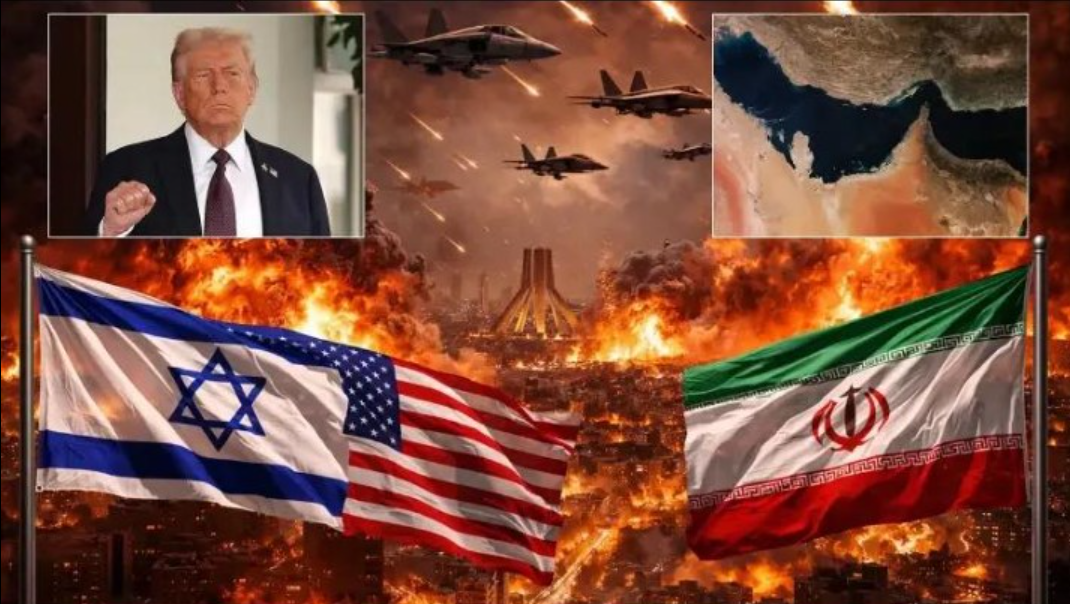
In a dramatic escalation that has raised global alarm, reports have circulated describing coordinated U.S. and Israeli airstrikes on Iranian targets early Saturday morning. While such claims remain unverified by major international news organizations, the scenario outlined reflects the kind of high-stakes confrontation that analysts have long warned could erupt in the Middle East under worsening tensions.
According to the reports, the alleged operation—referred to as “Operation Epic Fury”—targeted a wide range of strategic sites across Iran. These included Islamic Revolutionary Guard Corps (IRGC) command centers, ballistic missile installations, air defense systems, and nuclear-related facilities in key provinces such as Tehran, Isfahan, Qom, Kermanshah, and Karaj. U.S. President Donald Trump was said to have justified the strikes as necessary to counter “imminent threats,” while Israeli Prime Minister Benjamin Netanyahu framed them as a preemptive effort to neutralize what he described as an existential danger.
Unconfirmed claims also suggested that Iran’s Supreme Leader, Ayatollah Ali Khamenei, may have been killed in the strikes, though Iranian state media reportedly denied this, insisting he remained unharmed. Such conflicting accounts underscore the fog of information that typically surrounds rapidly developing crises, particularly those involving multiple state actors and information warfare.
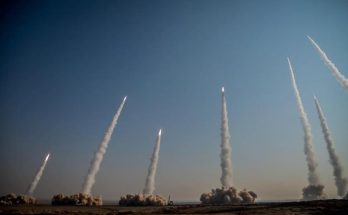
In this scenario, Iran’s response was swift and expansive. The IRGC allegedly launched waves of ballistic missiles and drones targeting Israel and U.S. military installations across the region, including bases in Qatar, the United Arab Emirates, Bahrain, Kuwait, Iraq, Jordan, and Saudi Arabia. Reports of explosions in several Gulf locations would signal a dangerous widening of the conflict, placing U.S. allies directly in harm’s way.
One of the most consequential developments described is the disruption of maritime traffic through the Strait of Hormuz. Iranian naval forces were said to have issued warnings to commercial vessels, declaring the waterway unsafe and effectively restricted. While no formal blockade was announced, even limited interference in this critical chokepoint could have major global implications. The strait handles roughly one-fifth of the world’s oil supply, along with significant volumes of liquefied natural gas, making it indispensable to global energy markets.
Historically, Iran has threatened to close the strait during periods of heightened tension but has stopped short of a full shutdown, likely due to the economic and military risks involved. Nonetheless, analysts agree that even partial disruption—through harassment, mines, or missile threats—could sharply increase shipping costs and reduce traffic.
Energy markets would likely react immediately. Oil prices, which had recently stabilized, could surge amid fears of supply disruption. Analysts often estimate that even a modest interruption in Hormuz flows could push prices significantly higher, with more severe scenarios driving them toward triple-digit levels. Such increases would ripple through the global economy, affecting transportation, manufacturing, and consumer costs.
Beyond economics, the broader geopolitical implications would be profound. Direct conflict between Iran, the United States, and Israel could draw in regional proxies and destabilize neighboring countries. While the details in these reports remain unconfirmed, they illustrate the scale of consequences that such a confrontation could trigger—and why the situation in the region continues to demand close international attention.