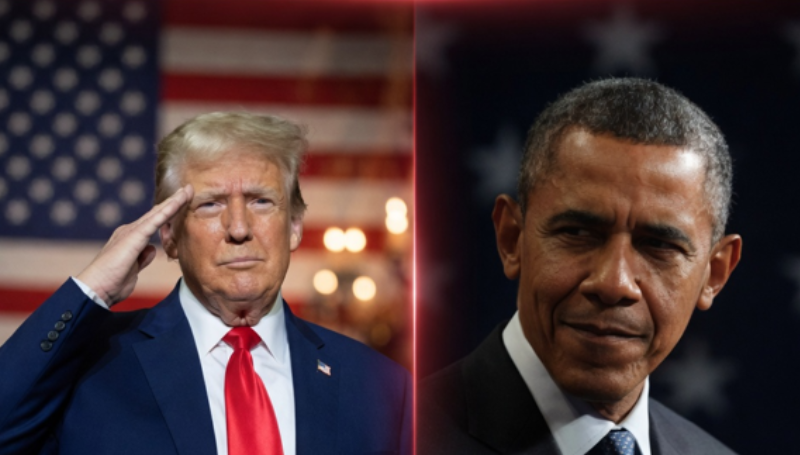
In a high-stakes campaign appearance in Philadelphia, former President Barack Obama delivered a pointed critique of former President Donald Trump, focusing on the rhetoric displayed during Trump‘s recent rally at Madison Square Garden. The former president’s remarks were primarily centered on a controversial joke made by comedian Tony Hinchcliffe, who referred to Puerto Rico as a “floating island of garbage.” Obama utilized this incident to argue that the Trump campaign relies on bigoted stereotypes and deliberate division to secure electoral gains, rather than fostering a sense of national unity.
Addressing a crowd on behalf of Vice President Kamala Harris, Obama asserted that Trump views the United States as a nation split between “real Americans” and “enemies within.” He emphasized that the targets of the rally’s rhetoric are fellow citizens, neighbors, and coworkers whose children attend the same schools as other American families. According to Obama, voters should reject any candidate who does not show basic respect for all citizens, suggesting that such a leader would fail to address the economic and educational needs of the populace, such as paying bills or securing a downpayment on a house. The narrative of the event, however, remains polarized. While Obama positioned himself as an advocate for turning the page on “hatred,” critics labeled his speech as a source of further division. They pointed to factual accounts regarding Puerto Rico‘s ongoing struggles with waste management to provide context for the comedian’s remarks. Furthermore, the article highlights that Kamala Harris echoed these sentiments during a speech at the Ellipse in Washington, D.C., where she claimed Trump would enter the Oval Office with an “enemies list” and might use the United States military against political dissenters. Ultimately, the exchange underscores the intense rhetorical battle defining the final days of the election. Harris and Obama have increasingly focused on the potential dangers they believe a second Trump term poses to the Justice Department and American democratic norms. Conversely, supporters of the former president view these claims as “myths” designed to distract from the current administration’s record. As both sides sharpen their messaging, the contrast between the Democratic call for a “better story” and the Republican populist appeal remains the central tension of the 2024 race.