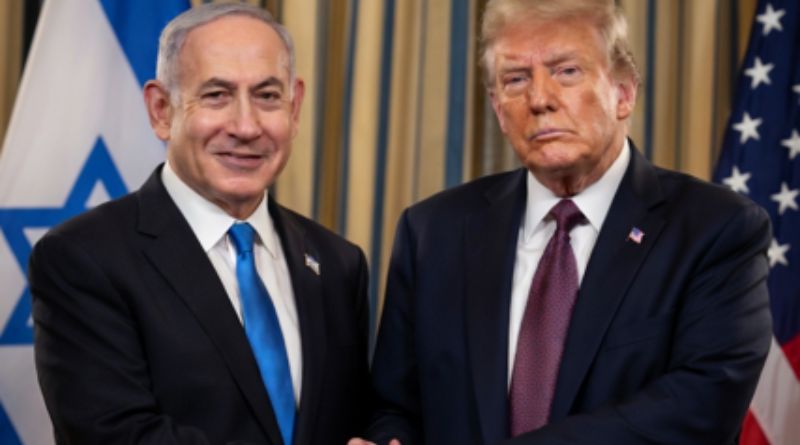
President Donald Trump said Sunday that the United States could intensify its military campaign against Iran’s energy infrastructure if a peace agreement is not reached soon, while also suggesting that negotiations may be moving toward a resolution.
In a post on Truth Social, Trump stated that the U.S. is engaged in “serious discussions” with what he described as a “new, and more reasonable” leadership in Iran. He indicated that progress has been made in talks aimed at ending ongoing military operations but coupled that message with a strong warning about potential consequences if diplomacy fails.
Trump said that if a deal is not finalized in the near future—and if Iran does not reopen the Strait of Hormuz to full commercial traffic—the U.S. could target critical elements of Iran’s energy infrastructure. He specifically mentioned electric power facilities, oil wells, Kharg Island, and possibly desalination plants. According to Trump, these sites have not yet been struck but remain under consideration as potential targets.
He framed the threat as a response to what he described as decades of violence against Americans, referencing attacks carried out during Iran’s current governing era. Despite the harsh language, Trump emphasized that a negotiated settlement remains likely and preferable to further escalation.
Secretary of State Marco Rubio offered additional context on Friday, saying U.S. military operations in Iran could conclude within a matter of weeks. Speaking after meetings with foreign ministers from the Group of Seven nations in France, Rubio said the timeline aligns with earlier estimates of a four- to seven-week campaign.
“It’s a question of weeks, not months,” Rubio said, noting that U.S. objectives are being achieved faster than anticipated.
Rubio also confirmed that the U.S. has received indirect communications from Iran بشأن potential negotiations. However, he said there is still uncertainty about who would represent Tehran in formal talks and what specific issues would be addressed.
“We’re waiting for further clarification about who it is that we would be talking to, what we would be talking about, and when we will be talking,” Rubio explained.
The Trump administration has reportedly presented a 15-point proposal intended to end the conflict. Special envoy Steve Witkoff expressed optimism that negotiations could begin soon, saying the framework has been shared with Iranian officials and could provide a comprehensive resolution if accepted.
Trump previously said he paused a planned strike on Iran’s power infrastructure to allow space for diplomacy. He added that Iran appears interested in reaching an agreement, reinforcing his view that a deal is within reach.
The conflict began on February 28 with coordinated U.S. and Israeli military operations and has since resulted in the deaths of several senior Iranian leaders. In response, the United States has deployed additional forces to the region to maintain military readiness as the situation evolves.
Iranian officials have accused Israel of targeting nuclear facilities and major industrial sites, including steel plants. Foreign Minister Abbas Araghchi warned that Tehran would impose a “heavy price” in retaliation for those strikes.
The Islamic Revolutionary Guard Corps has also issued threats, saying it could target U.S. and Israeli-linked infrastructure across the region, particularly energy-related assets.
Tensions have also affected the Strait of Hormuz, a critical global shipping route through which about 20% of the world’s oil and liquefied natural gas passes. G7 nations have called for restoring full access after Iran moved to restrict navigation. Rubio noted reports that Iran has begun charging some vessels for safe passage, while Iranian lawmakers are considering measures tied to those restrictions.