During a landmark visit to the United States, Sanae Takaichi drew international attention not only for her diplomatic agenda but also for a brief, memorable personal exchange with Donald Trump and his family. As Japan’s first female prime minister, her presence at the White House symbolized both continuity and change in U.S.–Japan relations, blending traditional diplomacy with a modern, personable approach.
The visit itself carried significant strategic weight. Takaichi met with U.S. officials to discuss a range of pressing issues, including economic cooperation, trade negotiations, regional security, and stability in the Indo-Pacific. At a time of evolving geopolitical dynamics, both nations emphasized the importance of maintaining a strong alliance rooted in shared interests and mutual trust. Yet, amid these serious discussions, it was a lighter, human moment that captured widespread public and media attention.
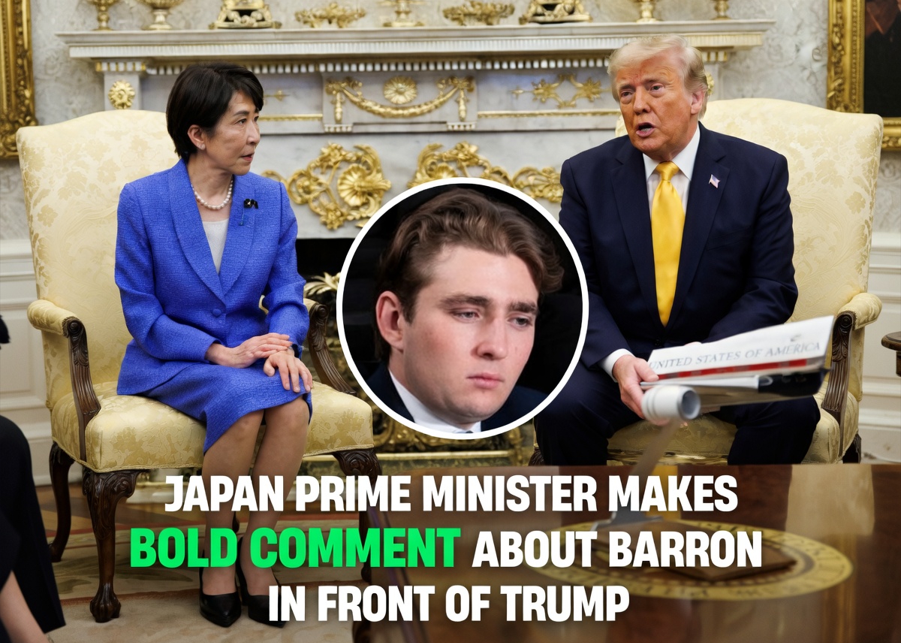
During a formal White House dinner hosted by the Trump administration, Takaichi took a moment to acknowledge Barron Trump, the president’s youngest son, who was approaching his birthday. Through a translator, she offered a thoughtful and culturally nuanced compliment, noting that Barron had grown into a “very tall, good-looking young gentleman.” She then extended her remarks to Trump himself, adding with a smile that it was clear where Barron inherited those qualities, crediting both of his parents.
The comment, though brief, was delivered with warmth and precision. Trump responded positively, smiling and expressing appreciation for the kind words. His relaxed reaction, including a light gesture of acknowledgment, reflected the informal tone that briefly complemented the otherwise formal setting. The exchange stood out as a moment of genuine connection, highlighting how personal interactions can enhance diplomatic engagements.
Observers noted that such remarks are not unusual within the context of Japanese social etiquette. Complimenting personal attributes or acknowledging family milestones is often seen as a sign of respect and attentiveness. In this sense, Takaichi’s words were not merely casual—they were culturally informed and strategically appropriate. By recognizing a personal detail, she demonstrated awareness that diplomacy extends beyond policy into the realm of human connection.
Barron Trump’s height has long been a topic of public curiosity, frequently mentioned in media coverage and public appearances. Towering over many members of his family, he has drawn attention for his striking physical presence and reserved demeanor. In previous comments, Trump himself has spoken about his son’s growth, attributing it in part to family traits and even humorously to dietary habits influenced by his wife, Melania, and her family.
The dinner provided an opportunity for both formal dialogue and informal interaction, illustrating how state visits often operate on multiple levels. While leaders engage in critical negotiations behind closed doors, events like these allow them to build rapport in more subtle ways. Small gestures—such as remembering a birthday or offering a compliment—can leave lasting impressions that influence the tone of broader discussions.
Political analysts frequently emphasize the importance of these softer elements of diplomacy. Personal rapport can ease tensions, foster goodwill, and create an environment more conducive to productive negotiations. In this instance, Takaichi’s comment served as a reminder that even in highly structured settings, moments of authenticity can resonate deeply.
Media coverage of the visit reflected this duality. Reports highlighted both the substantive policy discussions and the lighter, humanizing interactions that unfolded during the evening. For many observers, the exchange involving Barron added a relatable dimension to an otherwise formal occasion, offering insight into the personalities behind the political roles.
Ultimately, Takaichi’s visit underscored the enduring importance of balancing professionalism with personal connection in international relations. Her ability to navigate both spheres—addressing complex geopolitical issues while engaging thoughtfully on a personal level—demonstrated a nuanced approach to leadership. The brief exchange at the dinner, though simple in nature, illustrated how diplomacy is often shaped not only by agreements and strategies but also by moments of respect, warmth, and shared humanity.