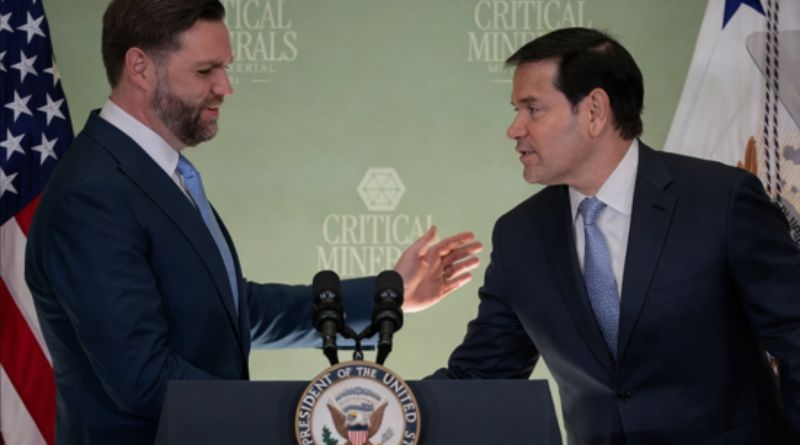
Secretary of State Marco Rubio expressed significant optimism this Thursday about the potential to achieve lasting peace between Israel and Lebanon. He stated that in the coming weeks, they will be closer to the type of enduring peace that the people of both nations deserve.
His remarks were made during the second round of direct talks between the two countries, which took place in Washington. This was the first meeting of its kind since 1993, and it is part of ongoing negotiations to extend the ceasefire that is set to expire this Sunday, April 26. The 10-day ceasefire had been announced by President Donald Trump weeks prior, CiberCuba reported.
The initial round of talks marked a significant milestone, representing the first meeting between the ambassadors of Israel and Lebanon in more than four decades. The negotiations were led by a team appointed by Trump, working alongside Vice President JD Vance and Joint Chiefs of Staff Chairman Air Force Gen. Dan Caine.
“We had a great meeting with very high officials of Lebanon and very high officials of Israel,” Trump said during a press conference on Thursday. “They’ve agreed to an additional three weeks of ceasefire. […] It’ll be a wonderful thing to get this worked out simultaneously with what we’re doing in Iran.”
He added later: “I think there’s a very good chance of having peace,” while Vance called the agreement “a major, historic moment.”
“We’re going to extend the ceasefire for three weeks, that’s already in place between Israel and Lebanon,” Vance said. “Of course, it wouldn’t have happened without the President’s direct engagement.”
Michel Issa, the U.S. ambassador to Lebanon, thanked the administration for brokering the talks. “I would like to thank the president, the vice president, and secretary to make this historical meeting today,” Issa said. “This is 60, 70 years in the making, and today is really a historical day.”
US Ambassador to Israel Mike Huckabee said the two nations themselves are not obstacles to peace. “The people of Lebanon and the people of Israel are neighbors, and they want to get along, they can get along,” Huckabee said. “The problem is not Lebanon, the problem is not Israel. The problem is Hezbollah.”
Israel’s ambassador to the United States, Yechiel Leiter, said he is hoping for a more permanent accord. “We hope that together, under your leadership, we can formalize peace between Israel and Lebanon in the very near future,” Leiter said.
Rubio said both Israel and Lebanon have been affected by the activities of Hezbollah and described the extension of the ceasefire as an opportunity to continue efforts toward a more lasting resolution, the outlet reported.
Rubio also emphasized that negotiations are being conducted through the Lebanese government, stating that only the Lebanese state represents the country in diplomatic discussions, not non-state armed groups.
“The Lebanese people deserve to live in a peaceful and prosperous country. They have the opportunity to achieve it. They have a history of doing so. And what stands in the way is a terrorist organization operating within their national territory, and that threat must be eliminated,” said Rubio.
The Trump administration is seeking a long-term security framework that focuses on reducing the influence and capabilities of Hezbollah and other Iran-aligned groups, while addressing security concerns along Israel’s northern border and broader U.S. strategic interests in the region.
President Trump said he expects to host Israeli Prime Minister Benjamin Netanyahu and Lebanese President Joseph Aoun at the White House in the near future. “It was a Great Honor to be a participant at this very Historic Meeting!” Trump wrote in his original post.
Rubio also discussed Iran’s potential participation in the upcoming World Cup soccer matches in the United States. He said the U.S. has not barred Iranian athletes but “what they can’t bring is a bunch of IRGC terrorists into our country and pretend that they’re journalists and athletic trainers.”