Tensions around the Strait of Hormuz have intensified after a sudden and confusing sequence of events. The waterway briefly reopened on Friday, only to be placed back under strict military control early Saturday, raising fresh concerns about stability in one of the world’s most critical shipping routes.
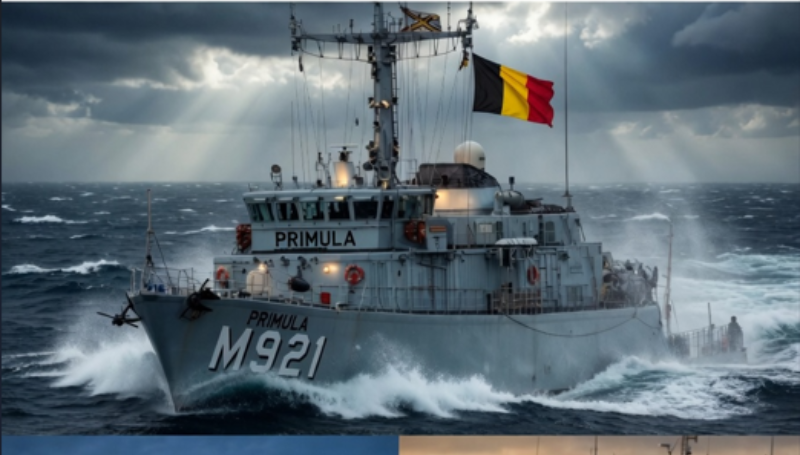
Amid this uncertainty, Belgium quietly approved the deployment of the BNS Primula, a specialized naval vessel designed to detect and neutralize sea mines. The timing—just one day before the renewed closure—has drawn attention, even though such movements often receive little immediate media coverage.
Unlike traditional warships, the Primula is built for precision rather than speed or combat. Minehunters operate methodically, scanning and securing sections of water where even a single undetected mine could threaten commercial vessels or disrupt global energy supplies. While one ship alone cannot secure an entire strait, its presence signals readiness to address one of the most dangerous maritime threats.
Adding complexity to the situation, the Primula is nearing the end of its service life. Belgium has already decided to phase out its Tripartite-class minehunters, with plans to transfer them abroad. Deploying a vessel scheduled for decommissioning may seem unusual, but it reflects a broader transition within European navies toward newer technologies while still relying on existing capabilities when needed.
The situation highlights a key reality: naval mines remain a powerful asymmetric tool. Even a limited threat can create widespread uncertainty, affecting shipping decisions, insurance costs, and global markets. In this context, the deployment of a minehunter is less about immediate action and more about preparedness, signaling that even the most specialized risks are being taken seriously.