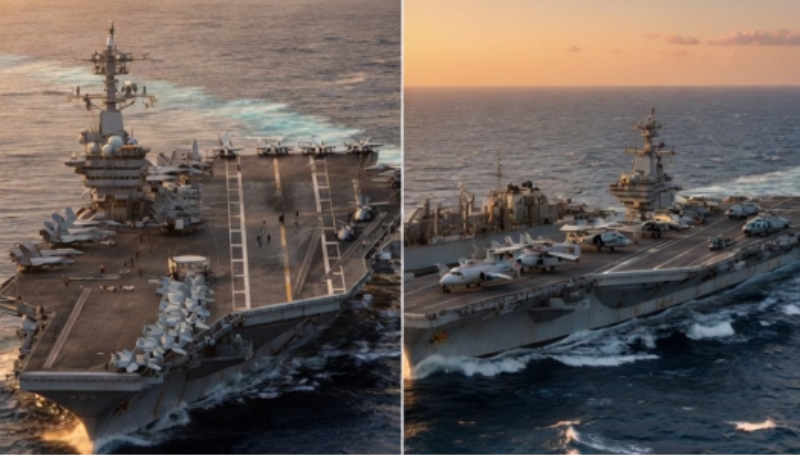
Tensions appear to be rising as the United States increases its naval presence across the Middle East. What might seem like routine military activity is drawing closer scrutiny due to its scale and coordination.
In the Eastern Mediterranean, the USS Gerald R. Ford has been conducting fast-paced flight operations that suggest more than standard training. At the same time, two additional carriers—the USS Abraham Lincoln and the USS George H.W. Bush—have been deployed across the region, forming a rare three-carrier presence.
Together, these strike groups create a layered and flexible force capable of handling multiple missions simultaneously, from air defense to rapid-response strikes. Positioned near strategic waterways like the Strait of Hormuz and the Bab el-Mandeb, they strengthen control over critical shipping routes.
The advanced systems aboard the Ford further enhance operational speed and efficiency, allowing more frequent and adaptable missions. While officially described as a deterrent and stability measure, the scale and structure of this deployment suggest a broader level of preparedness, raising questions about whether it is precautionary—or a sign of readiness for rapid action if conditions suddenly change.