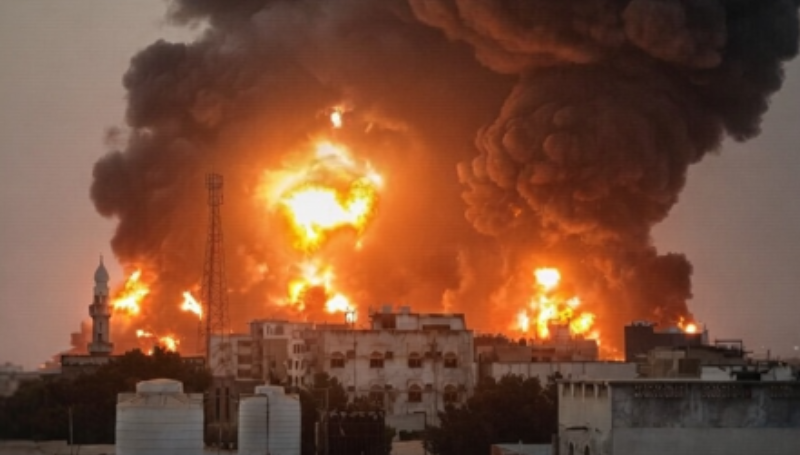
An Israeli airstrike on the Houthi-controlled port of Hodeida has caused extensive damage estimated at more than $20 million, according to local port officials, with overall losses expected to be significantly higher once destroyed fuel infrastructure is fully assessed.
The attack took place on July 20 and targeted one of the most important maritime hubs under Houthi control in western Yemen. The port serves as a critical entry point for commercial goods and fuel supplies into areas held by the Iran-backed Houthi movement. According to officials, the strike triggered large explosions and fires that spread across fuel storage sites and nearby facilities, burning for several days and severely damaging infrastructure.
The Israeli operation came in direct response to a drone attack launched by Houthi forces on July 19, which struck Tel Aviv and resulted in the death of an Israeli civilian. In retaliation, Israel launched a coordinated air assault involving dozens of aircraft. The targets reportedly included fuel depots, energy infrastructure, cargo handling equipment, and several large container cranes essential to port operations.
Houthi authorities reported that nine people were killed in the strike, which they described as a major escalation in the ongoing regional conflict. It was also the first publicly acknowledged Israeli military operation on Yemeni territory since hostilities involving the group intensified in the context of the wider Middle East conflict.
Nasr al-Nusairi, a senior official with the Yemen Red Sea Ports Corporation, provided a preliminary damage assessment after visiting the site. He confirmed that at least two large container cranes were destroyed, a small vessel caught fire and was lost, and multiple buildings within the port complex suffered significant damage. He also noted that sections of the docks themselves had been impacted, affecting loading and unloading capacity.
Nusairi placed the direct port damage at over $20 million but emphasized that this figure excludes the destruction of fuel storage facilities, which fall under the responsibility of Yemen’s oil ministry. Those losses are expected to substantially increase the total cost of the attack.
Despite the scale of destruction, port operations resumed within days. Reports indicated that container ships were already docking again shortly after the strike, with limited cargo handling operations restarting using remaining infrastructure.
The Israeli military stated that the strike was intended to weaken Houthi logistical and economic capabilities, particularly by disrupting their ability to import goods and alleged weapons shipments through the port, which Israel claims has been used to facilitate Iranian arms transfers.
The incident underscores the expanding regional dimensions of the conflict, as Houthi maritime attacks and Israeli retaliatory strikes continue to heighten tensions across the Red Sea corridor.