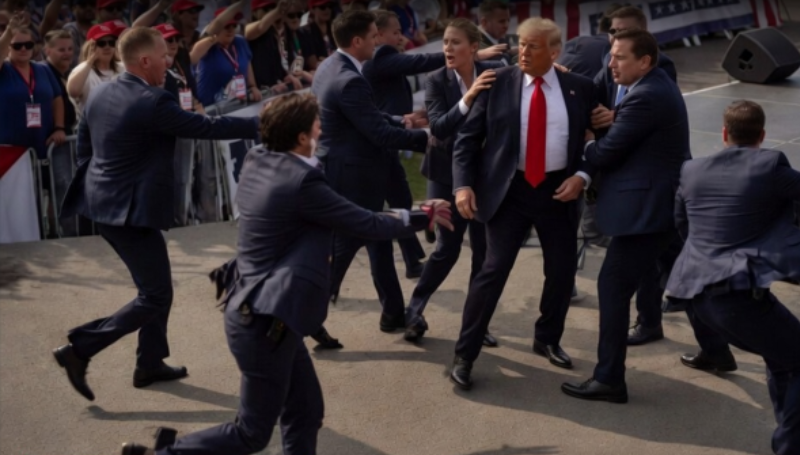
Shock rippled across social media today after alarming posts claimed that former U.S. President Donald Trump had been “shot again” in Washington, D.C. The dramatic wording spread rapidly, sparking panic, confusion, and a wave of intense reactions from both supporters and critics. Within a short time, however, it became clear that the truth behind the viral claim was far less sensational than it initially appeared. Despite the urgency and emotional tone of the posts, there has been no confirmation from any credible source that such an incident occurred. Major national and international news organizations—typically quick to verify and report events involving high-profile figures—have published nothing supporting the claim. Likewise, no statements have been issued by law enforcement agencies or the United States Secret Service, which would be expected to respond immediately to any threat involving a former president. The absence of official information strongly suggests that the story is unfounded. Much of the confusion appears to stem from misleading content circulating online. In many cases, older footage, unrelated images, or vague references are repackaged with sensational captions designed to provoke strong emotional reactions. These posts often originate from unverified accounts or private groups, where accuracy is secondary to engagement. In the fast-paced environment of social media, such content can gain traction quickly, reaching large audiences before fact-checkers or reliable outlets have time to respond. It is important to distinguish this rumor from the real and well-documented assassination attempt that took place in 2024 during a campaign rally in Butler, Pennsylvania. In that incident, Trump was injured but survived, prompting immediate national coverage, a coordinated law enforcement response, and increased security measures. Since then, authorities have remained vigilant, monitoring potential threats and adjusting protective protocols as needed. However, no verified event resembling the current viral claim has been reported. Security experts warn that the spread of false information like this can have serious consequences. Misleading reports may trigger unnecessary fear, overwhelm emergency services, and erode public trust in legitimate journalism. When people are repeatedly exposed to unverified or exaggerated claims, it becomes more difficult to distinguish between real emergencies and fabricated stories. Political analysts also note that figures as prominent as Trump are frequent targets of misinformation, particularly during politically sensitive moments. Sensational language is often used deliberately to encourage rapid sharing, exploiting emotional responses rather than promoting accuracy. In many cases, the goal is not to inform the public, but to generate attention, clicks, or division. At this time, all verified information confirms that Donald Trump has not been shot again, either in Washington, D.C., or elsewhere. Officials continue to encourage the public to rely on trusted news sources and confirmed statements when evaluating breaking developments. This incident serves as a reminder that in today’s digital landscape, not everything labeled as “breaking news” is reliable. Careful verification and critical thinking remain essential tools for navigating an environment where misinformation can spread as quickly as the truth.
Shock rippled across social media today after alarming posts claimed that former U.S. President Donald Trump had been “shot again” in Washington, D.C. The dramatic wording spread rapidly, sparking panic, confusion, and a wave of intense reactions from both supporters and critics. Within a short time, however, it became clear that the truth behind the viral claim was far less sensational than it initially appeared.

Despite the urgency and emotional tone of the posts, there has been no confirmation from any credible source that such an incident occurred. Major national and international news organizations—typically quick to verify and report events involving high-profile figures—have published nothing supporting the claim. Likewise, no statements have been issued by law enforcement agencies or the United States Secret Service, which would be expected to respond immediately to any threat involving a former president. The absence of official information strongly suggests that the story is unfounded.

Much of the confusion appears to stem from misleading content circulating online. In many cases, older footage, unrelated images, or vague references are repackaged with sensational captions designed to provoke strong emotional reactions. These posts often originate from unverified accounts or private groups, where accuracy is secondary to engagement. In the fast-paced environment of social media, such content can gain traction quickly, reaching large audiences before fact-checkers or reliable outlets have time to respond.

It is important to distinguish this rumor from the real and well-documented assassination attempt that took place in 2024 during a campaign rally in Butler, Pennsylvania. In that incident, Trump was injured but survived, prompting immediate national coverage, a coordinated law enforcement response, and increased security measures. Since then, authorities have remained vigilant, monitoring potential threats and adjusting protective protocols as needed. However, no verified event resembling the current viral claim has been reported.

Security experts warn that the spread of false information like this can have serious consequences. Misleading reports may trigger unnecessary fear, overwhelm emergency services, and erode public trust in legitimate journalism. When people are repeatedly exposed to unverified or exaggerated claims, it becomes more difficult to distinguish between real emergencies and fabricated stories.

Political analysts also note that figures as prominent as Trump are frequent targets of misinformation, particularly during politically sensitive moments. Sensational language is often used deliberately to encourage rapid sharing, exploiting emotional responses rather than promoting accuracy. In many cases, the goal is not to inform the public, but to generate attention, clicks, or division.

At this time, all verified information confirms that Donald Trump has not been shot again, either in Washington, D.C., or elsewhere. Officials continue to encourage the public to rely on trusted news sources and confirmed statements when evaluating breaking developments. This incident serves as a reminder that in today’s digital landscape, not everything labeled as “breaking news” is reliable. Careful verification and critical thinking remain essential tools for navigating an environment where misinformation can spread as quickly as the truth.

Leave a Reply

Your email address will not be published. Required fields are marked *