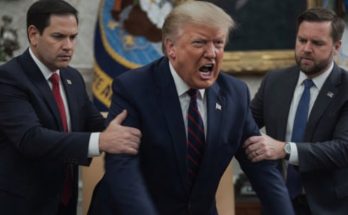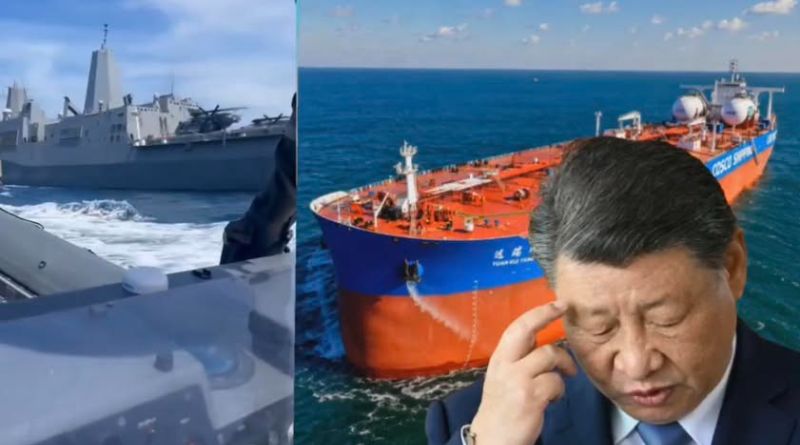
An unverified report circulating online claims that following a breakdown in weekend peace talks involving Iran, the United States escalated maritime pressure in the Strait of Hormuz on April 13, 2026. According to these accounts, US naval forces were said to have intensified enforcement measures near Iranian coastal waters, prompting widespread speculation about a possible blockade-like posture affecting oil shipping routes.
Shipping activity data shared on social tracking platforms has been interpreted by some commentators as showing disruptions in tanker movements. Several vessels reportedly bound for Asian markets altered their courses near the Strait shortly after the alleged escalation window. Among the ships frequently mentioned in these reports are oil tankers identified in open-source databases, though the reasons for their course changes have not been independently verified and may include commercial routing decisions, weather avoidance, or signal inconsistencies.
The reports further suggest that Washington’s approach is aimed at restricting Iranian oil revenue flows, a key component of the country’s economy, while maintaining broader freedom of navigation for neutral shipping. However, no official US Department of Defense or Central Command statement has confirmed the existence of a formal blockade or comparable military action against Iranian ports.
Analysts caution that the Strait of Hormuz remains one of the most sensitive maritime corridors in the world, and even minor shifts in naval presence or sanctions enforcement can generate significant market reactions and online speculation. Claims involving specific political directives, including references to former President Donald Trump, have not been substantiated by official sources.
As of now, major international news agencies have not confirmed any blockade or direct naval closure of Iranian ports, and the situation remains subject to competing narratives and unverified social media reports.
Observers also note that information emerging from conflict-adjacent maritime zones often spreads rapidly through social media before verification, leading to confusion between routine naval activity and coordinated military operations. Experts recommend relying on official maritime advisories and established news agencies when assessing developments in strategically sensitive waterways such as the Strait of Hormuz. Until corroborated by multiple independent sources, claims of a blockade should be treated as unconfirmed and potentially misleading, particularly when based solely on partial shipping data or politically charged interpretations of evolving events. Verification from multiple independent maritime authorities is still required at present.