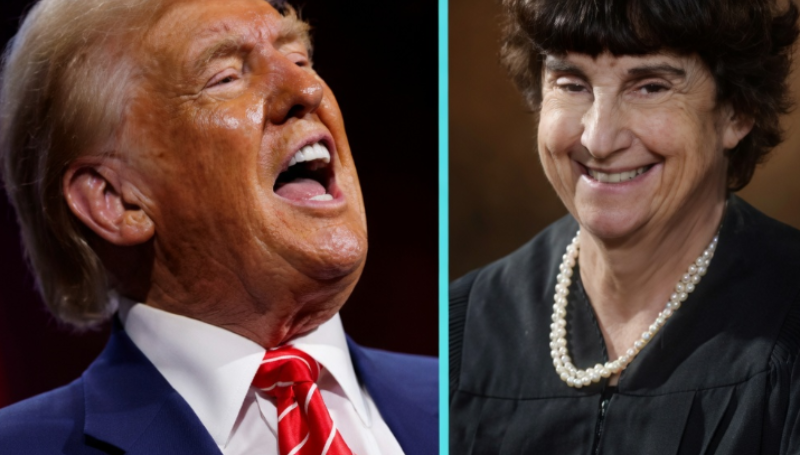
A federal judge has temporarily blocked the Trump administration from ending Temporary Protected Status (TPS) for thousands of Ethiopian nationals, marking the latest development in an ongoing legal dispute over immigration policy and executive authority.
U.S. District Judge Brian Murphy ruled that the administration could not move forward with terminating the program, determining that the process used to revoke protections likely did not comply with federal law. As a result, the decision postpones the planned end of TPS for more than 5,000 Ethiopians who are currently living and working in the United States under the program.
TPS is administered by the Department of Homeland Security and provides temporary legal status to individuals from countries experiencing armed conflict, environmental disasters, or other extraordinary conditions. Ethiopia was first granted TPS designation in 2022, and that protection was later extended through early 2026.
Shortly after returning to office in January 2025, the Trump administration announced its intention to terminate Ethiopia’s TPS designation. Officials argued that conditions in the country had improved sufficiently and no longer met the legal requirements necessary to justify continued protection. According to the administration, the decision followed a formal evaluation of conditions on the ground and consultations with other federal agencies.
However, Judge Murphy found that the administration’s actions likely failed to meet key procedural standards outlined in federal law, particularly those required by the Administrative Procedure Act. This law governs how federal agencies create and implement policies, requiring decisions to be properly justified and carried out through established processes. Because of these concerns, the judge ordered a delay, allowing TPS protections for Ethiopian nationals to remain in place while the case continues.
This is not the first time the court has intervened in this matter. Earlier in 2026, Murphy issued a temporary restraining order that prevented the immediate termination of TPS for Ethiopians. The latest ruling extends that pause and suggests the court remains skeptical about whether the administration followed the proper legal framework in making its decision.
The case highlights a broader and ongoing legal conflict over the scope of executive power in immigration policy. While federal law grants the Secretary of Homeland Security significant authority to designate, extend, or terminate TPS based on country conditions, courts have repeatedly stepped in to review how that authority is exercised.
In several cases, judges have blocked attempts to end TPS protections, often citing concerns that such decisions were arbitrary, inadequately supported, or procedurally flawed. At the same time, the Supreme Court has, in certain instances, allowed TPS terminations to proceed by granting temporary stays while legal challenges are still underway.
Following the ruling, the Department of Homeland Security criticized the decision, arguing that it represents judicial overreach into executive responsibilities. Administration officials indicated they are considering their next legal steps, including a possible appeal.
For now, the ruling ensures that Ethiopian TPS holders can continue to live and work in the United States as the legal battle unfolds, leaving the program’s future uncertain.