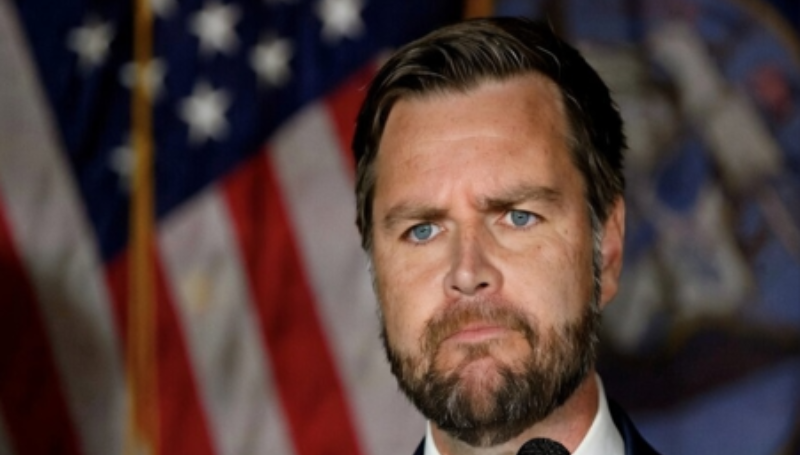
JD Vance issued a sharp warning to Iran, cautioning of “severe consequences” if tensions continue to escalate, during remarks alongside Viktor Orbán in Budapest. His comments came as a U.S.-imposed deadline for a ceasefire loomed.
Vance said Washington expected a response from Tehran by Tuesday evening, emphasizing that the United States was prepared for either a positive or negative outcome. He underscored the broader goal of maintaining stability in global energy markets, stressing that uninterrupted oil and gas flows are essential for everyday life worldwide.
He accused Iran of engaging in what he described as “economic terrorism,” warning that the U.S. has additional tools it has not yet deployed. According to Vance, President Donald Trump retains the authority to escalate pressure if Iran fails to alter its course.
The tensions center on the Strait of Hormuz, a critical global oil transit route that has historically carried roughly one-third of the world’s seaborne crude exports. Iran’s decision to close or heavily restrict the passage in response to U.S.-Israeli strikes in late February 2026 caused maritime traffic to plummet and triggered sharp volatility in energy markets.
Earlier, Trump claimed that Iran had agreed to allow a limited number of oil tankers through the strait—initially 10, later expanded to 30 vessels—describing the move as a concession during ongoing negotiations. He simultaneously issued stark ultimatums, including a 48-hour warning, threatening to target Iranian infrastructure if the waterway remained blocked.
The situation escalated further after Iran reportedly downed two U.S. aircraft, though all personnel were safely recovered.
As the deadline approached, both sides announced a two-week ceasefire. The agreement includes a partial reopening of the Strait of Hormuz, with provisions allowing Iran and Oman to impose transit fees—an issue that has sparked debate given the strait’s long-standing status as an international passage.
Vance later described the agreement as a “fragile truce.” While noting encouraging signals from Iran’s foreign minister, he also accused some Iranian officials of misrepresenting aspects of the deal. He clarified that the ceasefire does not extend to groups like Hezbollah, calling any expectation of a broader halt in hostilities a misunderstanding.
Negotiations are expected to continue, with a U.S. delegation led by Vance reportedly heading to Islamabad. Although global markets responded positively to the temporary de-escalation, uncertainty remains over how long the truce will hold amid ongoing regional tensions.