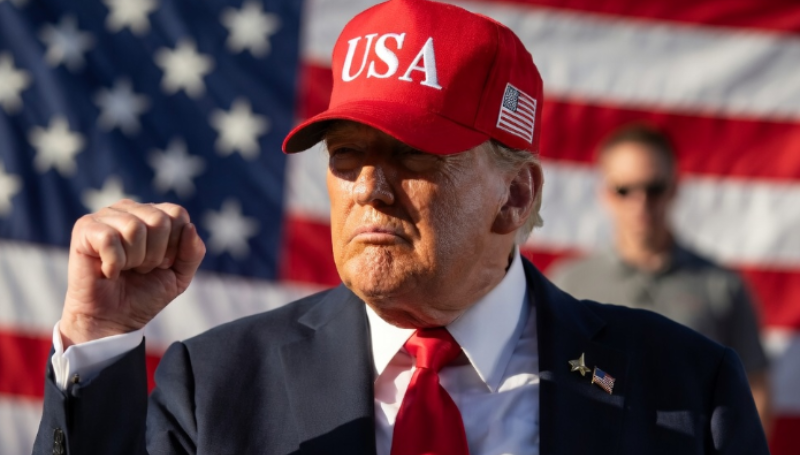
President Donald Trump on Sunday delivered a sharp warning that the United States could escalate its military campaign against Iran if Tehran fails to reopen the strategically crucial Strait of Hormuz by his stated deadline. His comments came shortly after U.S. forces carried out a high-risk rescue mission to recover an American aviator whose aircraft had been shot down inside Iranian territory.
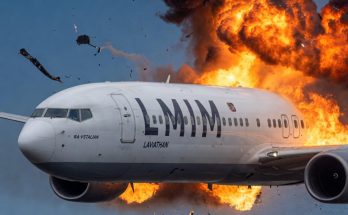
The incident began when an F-15E Strike Eagle crashed on Friday, prompting an urgent and complex search operation. Iran reportedly offered a reward for the captured pilot, intensifying the situation. According to Trump, the downed service member—described as seriously injured but courageous—was rescued from deep within a mountainous region during a coordinated effort involving dozens of aircraft. He also revealed that a second crew member had been safely recovered earlier in a separate operation conducted in daylight.
A senior U.S. official stated that the Central Intelligence Agency played a key role in the mission by spreading false information داخل Iran about the pilot’s location. This tactic reportedly misled Iranian forces and bought critical time for U.S. personnel to complete the rescue. The official spoke anonymously due to the classified nature of the operation.
At the same time, tensions across the region continued to rise. Iran challenged aspects of the U.S. account and launched retaliatory strikes targeting infrastructure in neighboring Gulf countries. Iranian officials also warned they could disrupt traffic through another vital waterway, the Bab el-Mandeb Strait, further threatening global trade routes.
In a strongly worded social media post, Trump vowed to target Iran’s infrastructure—including power plants and bridges—if the Strait of Hormuz remains closed. He warned that Iran would face severe consequences, signaling a potential escalation in the already intensifying conflict. Despite issuing similar ultimatums in the past, Trump has occasionally extended deadlines when diplomatic negotiations showed signs of progress.
Iranian leaders responded critically, with some officials describing Trump’s approach as unpredictable and inconsistent. Tehran also warned that any attacks on civilian infrastructure could lead to broader retaliation across the region. Legal experts emphasize that under international law, such targets can only be struck if the anticipated military advantage outweighs the potential harm to civilians—a threshold that is difficult to justify.
Further reports indicated ongoing military clashes, including claims that Iran had shot down another U.S. aircraft, though details about the crew’s status remain unclear. Conflicting accounts also emerged regarding damage to U.S. equipment during the rescue mission, with some suggesting that mechanical failures contributed to losses rather than direct enemy fire.
Meanwhile, diplomatic efforts continue behind the scenes, with countries such as Oman working to mediate between Washington and Tehran. Despite these efforts, the conflict has already caused widespread devastation. Thousands of lives have been lost, infrastructure has been severely damaged, and global markets have been shaken. As the situation evolves, concerns are growing that the conflict could expand further, with serious implications for regional stability and the global economy.