The situation escalated sharply following the confirmed death of Iran’s Supreme Leader, intensifying geopolitical tensions and raising fears of a direct confrontation between Iran and the United States in March 2026.
For decades, relations between the two countries have been defined by sanctions, proxy conflicts, and persistent political rivalry. However, the current crisis represents one of the most dangerous moments in recent history, with both sides facing increasing pressure to respond decisively.
In Tehran, official rhetoric has reportedly shifted from theoretical warnings to more concrete strategic planning. Intelligence officials are now closely monitoring reports suggesting that Iran may be preparing a retaliatory strike against the U.S. mainland.
According to internal intelligence assessments, an initial phase of action could occur with little notice, possibly within hours. This development has placed global security agencies on high alert, as governments work to assess the credibility and scale of the threat.
Public awareness of the Iran–U.S. strike threat grew rapidly after widespread media coverage of the leadership crisis. Soon afterward, intelligence reports pointed to intercepted communications and satellite imagery indicating the movement of long-range military assets. These signals suggest the possibility of a coordinated, multi-domain operation.
Unlike previous confrontations, which were often limited to cyber activity or regional incidents, analysts believe the current threat may carry a strong symbolic purpose. Experts have described the potential strategy as “demonstrative trauma,” intended to show that the U.S. homeland is not beyond reach rather than to achieve territorial gains.
Military analysts are evaluating several potential targets that combine symbolic importance with operational value. The East Coast corridor, particularly Washington, D.C., and New York City, remains a primary concern due to its political and financial significance.
At the same time, the West Coast presents additional vulnerabilities. States such as California and Washington are home to major naval bases and satellite command centers. Disrupting these installations could hinder military coordination and slow a unified response.
Energy infrastructure is another key area of concern. The Gulf Coast and Texas serve as critical hubs for U.S. energy production, and any disruption there could have widespread economic consequences, both domestically and globally.
Although the United States operates advanced missile defense systems such as Aegis and THAAD, experts caution that even these systems could be challenged by a large-scale, coordinated attack, particularly one employing swarm tactics.
Across the country, public anxiety has grown significantly. In some areas, residents have begun preparing emergency supplies, while social media has become saturated with speculation and unverified reports, contributing to widespread uncertainty.
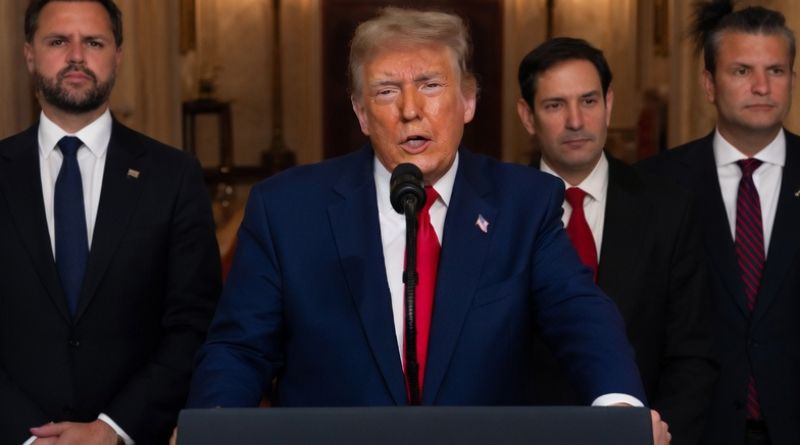
In response, the U.S. government has increased its readiness posture, raising defense alert levels and reinforcing emergency systems. In a brief Oval Office address, the President warned that any attack would be met with overwhelming force, emphasizing a strategy of deterrence.
This crisis highlights a broader shift in global security. Advances in long-range weapons technology have diminished the protective advantage once provided by geography. As tensions remain high, the outcome of this standoff could shape global stability for years.