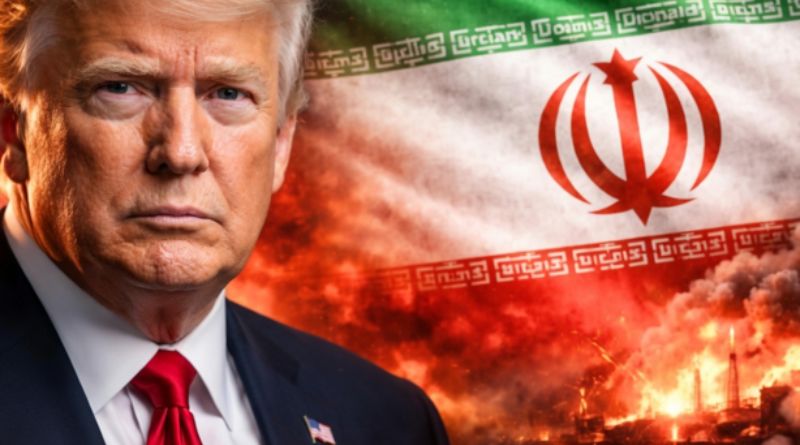
President Donald Trump on Saturday delivered a forceful warning to Iran, saying the country would face severe consequences if it failed to reopen the Strait of Hormuz or agree to a ceasefire within 48 hours. In a post on Truth Social, Trump referenced a previous deadline and stressed that time was rapidly running out, cautioning that failure to comply would trigger a major military response.
The Strait of Hormuz is one of the most strategically important waterways in the world, serving as a vital route for global oil shipments. Iran’s decision to close the strait, reportedly in retaliation for recent U.S. and Israeli strikes, has already caused volatility in international energy markets. Any prolonged disruption could significantly impact global oil supply and economic stability.
Trump’s latest remarks build on earlier warnings issued in late March, when he said he would delay strikes on Iran’s energy infrastructure to allow room for negotiations. Despite that temporary pause, tensions have escalated sharply. Just last weekend, Trump issued a similar 48-hour ultimatum, threatening to target Iran’s power plants if the waterway was not reopened.
The situation intensified further after Iran reportedly shot down two U.S. military aircraft on Friday. Trump later confirmed that all crew members had been successfully rescued. On Saturday evening, he announced the recovery of the final downed airman, describing the mission as one of the most complex and daring rescue operations in U.S. military history.
In a detailed statement, Trump explained that the rescued officer, a colonel serving as a weapons systems officer aboard an F-15E Strike Eagle, had been stranded deep inside hostile territory. Despite injuries and the threat of capture, U.S. forces were able to locate and extract him safely. The operation involved extensive coordination across multiple branches of the military and was carried out without any American casualties.
Trump also revealed that another pilot had been rescued earlier, though officials had withheld that information at the time to avoid compromising the second mission. He characterized both rescues as historic, noting that it is extremely rare for two separate recoveries to be successfully conducted behind enemy lines under such dangerous conditions.
Military experts highlighted the difficulty of such operations. Mick Ryan, a senior fellow for military studies at the Lowy Institute and a retired major general in the Australian Army, said that missions like these require rapid planning, precise intelligence, and seamless coordination among air and ground units. He noted that only a few militaries in the world have the capability to execute such high-risk rescues effectively.
As the 48-hour deadline approaches, the situation remains highly volatile. Trump’s warning signals a narrowing window for diplomacy, raising concerns about further escalation in an already tense region. The international community is closely monitoring developments, as any additional conflict could have serious consequences for global security and economic stability.