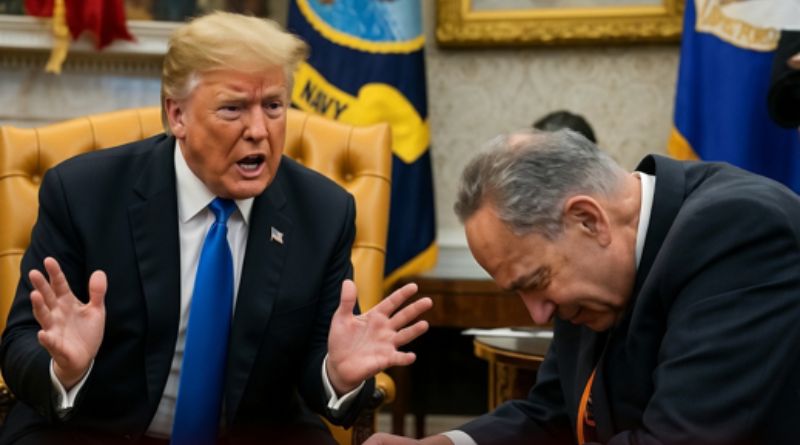
On Wednesday, the U.S. Senate rejected a second attempt to limit President Donald Trump’s military operations in Iran, voting 48-53 against a war powers resolution introduced by Sen. Cory Booker (D-N.J.). The vote largely followed party lines, although Sen. Rand Paul (R-Ky.) joined Democrats in supporting the measure, while Sen. John Fetterman (D-Pa.) broke with his party to vote against it.
The resolution criticized what it described as the administration’s “massive and ongoing” military activity in Iran and argued that Congress had been sidelined as the conflict escalated. Similar to a previous measure introduced by Sen. Tim Kaine, the proposal would have required the president to withdraw U.S. forces from hostilities not explicitly authorized by Congress. Despite facing significant obstacles due to near-unanimous Republican support for the military actions, proponents emphasized the symbolic importance of the vote in holding lawmakers accountable and testing their positions.
Additional Democratic senators are expected to introduce similar war powers measures in the coming days as part of a broader effort to compel congressional engagement on the issue, according to The Wall Street Journal. The rejection of this resolution marks another setback for lawmakers seeking to assert congressional authority over the ongoing operations, reflecting the persistent tension between the executive and legislative branches over the scope of war powers.
Since its passage in 1973, the War Powers Act has been viewed by presidents of both parties as an unconstitutional restriction on the commander-in-chief’s powers under Article II of the Constitution. However, the law has never been fully tested in the Supreme Court, leaving questions about its enforceability unresolved.
Sen. Fetterman, who has repeatedly expressed support for Trump’s military actions in the region, opposed both this and a previous war powers resolution. Earlier this month, he told CNN News Central that U.S. and Israeli operations to dismantle Iran’s nuclear capabilities were “entirely appropriate,” adding, “Just keep targeting them until they’re gone.” He emphasized that continued pressure is necessary to ensure that any successor to the late Ayatollah Ali Khamenei understands the need for peace and coexistence in the region.
Khamenei, who had served as Iran’s supreme leader for over three decades, was killed in joint U.S. and Israeli strikes that targeted his compound and Iran’s nuclear program. Some international reports suggest that the Assembly of Experts in Iran may have chosen Khamenei’s son, Mojtaba Khamenei, as his successor; however, there are indications that he may also have been neutralized during the ongoing operations.
Israel has made its position on regime change in Iran clear. Israeli Defense Minister Israel Katz stated on the social platform X that any leader installed by the regime would be considered “an unequivocal target for elimination.” He described such actions as “an integral part of the objectives” of the ongoing military campaign and emphasized that Israel, in coordination with the United States, would continue to act decisively to dismantle Iran’s nuclear capabilities and create conditions for political change.
Despite the close cooperation between U.S. and Israeli forces, American officials have stressed that nation-building is not a goal of their operations. Defense Secretary Pete Hegseth and Secretary of State Marco Rubio have repeatedly framed the mission as focused on eliminating nuclear and missile threats, while President Trump has encouraged the Iranian people to assume control over their government. This distinction highlights a nuanced approach: the U.S. aims to weaken Iran’s military and nuclear infrastructure without directly engaging in the complex political restructuring of the country.
Supporters of the failed war powers resolutions, along with those in the House, acknowledged the significant challenge of pushing through measures in a Congress largely supportive of military action. Still, they argued that the votes play an important role in demonstrating which lawmakers are willing to challenge the executive branch and in raising public awareness about the scope of U.S. military involvement abroad.
As tensions continue to rise, the situation in Iran remains fluid. While U.S. and Israeli forces are focused on dismantling nuclear threats and targeting key regime figures, the international community watches closely, aware that further escalation could have far-reaching regional and global consequences. The Senate’s vote underscores the enduring debate over congressional oversight of military operations and the balance of power between the legislative and executive branches in matters of war and foreign policy.