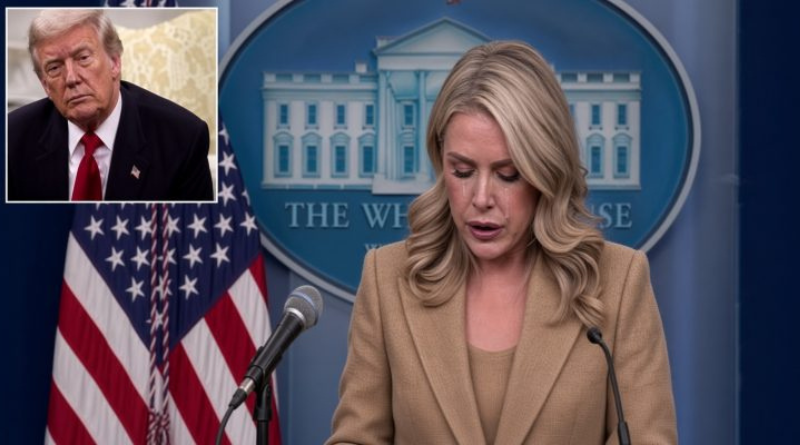
WASHINGTON — White House Press Secretary Karoline Leavitt mounted a forceful defense of the Trump administration’s overhaul of press operations during an onstage forum with Axios co-founder Mike Allen, insisting that curbed access for traditional outlets like the Associated Press is not a punitive campaign, but a modernization effort designed to democratize executive coverage.
The contentious exchange laid bare an escalating clash between the White House and the Washington press corps over the institutional balance of power. At stake is a foundational convention of presidential journalism: whether access to the commander in chief should continue to be anchored by legacy institutions, or reallocated at the discretion of the executive branch to an expanding array of digital upstarts, podcasters, and independent commentators.
Dismantling the Wire Service Monopolies
The friction centered on recent administration maneuvers to displace the Associated Press from its customary, permanent seat within the White House traveling press pool. Allen pressed Leavitt on whether sidelining the 179-year-old cooperative threatened the fidelity of the historical record, specifically citing AP photojournalist Evan Vucci’s iconic, Pulitzer-winning photograph of Donald Trump raising his fist after surviving the July 2024 assassination attempt in Butler, Pennsylvania.
Leavitt flatly rejected the premise that the policy represented a restriction on the press.
“I don’t view them as restrictions,” Leavitt countered, arguing instead that rotating legacy wire services out of fixed positions was necessary to create room for contemporary outlets. “Why should a single outlet have the privilege of being in that 13-person press pool every single day?”
Pointing to the hundreds of working reporters holding hard credentials and the thousands more accredited across the country, Leavitt argued that the current 13-member pool structure artificially favors legacy wire services at the expense of digital-first outlets, citing publications like Axios as natural beneficiaries of a widened rotation.
“The media landscape has transformed completely, and the West Wing press structure should reflect that reality,” Leavitt said, maintaining that the administration is dismantling legacy privileges rather than penalizing critical reporting.
Challenging the Press Corps’ Gatekeepers
The confrontation deepened when Allen brought up objections from the White House Correspondents’ Association (WHCA), the century-old, nonpartisan entity that independently manages pool rotations, seating charts, and traveling logistics. Allen noted the WHCA’s longstanding constitutional stance: the government should not wield authority over the journalists charged with scrutinizing it.
Leavitt pushed back directly against the association’s standing as an institutional arbiter.
She argued that an unelected board of media figures should not hold exclusive power to decide which journalists board Air Force One or enter the Oval Office during high-stakes diplomatic and legislative meetings. Instead, Leavitt asserted that the executive branch has the authority to curate an expansive, inclusive environment that distributes prime access beyond a legacy cartel.
Dismissing allegations that the restructuring is an ideological purge intended to manufacture flattering coverage, Leavitt pointed out that mainstream news organizations critical of Trump continue to hold daily press credentials and attend televised briefings.
“It’s not about ideology,” Leavitt maintained, framing the pivot as an overdue operational reset that mirrors Trump’s preference for nontraditional communication channels, podcasts, and digital creators.
Competing Standards of Presidential Access
The dialogue also turned to quantitative metrics of presidential transparency. Allen cited an Axios analysis comparing presidential availability, which documented that former President Joe Biden had completed 164 combined press conferences and interviews at a comparable juncture in his term, compared to 468 conducted by Trump.
While media analysts note that such figures often conflate impromptu hallway scrums and favorable radio spots with formal, long-format press conferences, Leavitt pointed to the disparity as evidence of an exceptionally accessible administration that prefers direct engagement over rigid press conferences.
The dispute signals a lasting institutional transformation. Press freedom advocates argue that government-curated press pools invite ideological patronage, allowing administrations to reward sycophantic outlets while freezing out rigorous watchdogs.
By contrast, the White House continues to cast its media playbook as a necessary confrontation with an outdated press cartel. As traditional news bureaus struggle to defend established protocols, the administration’s actions signal that access to the highest levels of the executive branch is increasingly contingent on an evolving, White House-managed media order.