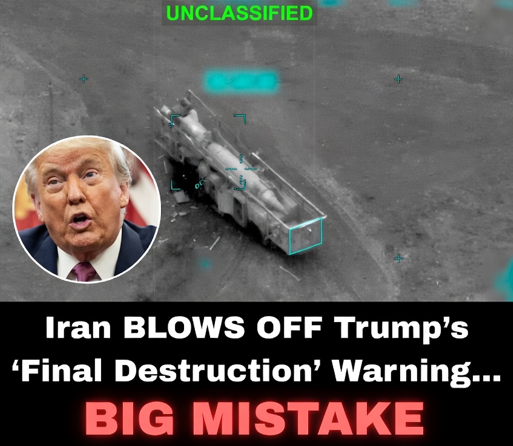
As Americans hopefully enjoy a quiet Saturday, tensions remain high in the Middle East, with ongoing concerns about Iran’s military activities and regional security. Recent reports have highlighted warnings from U.S. leadership about potential military action, though no independent sources have confirmed large-scale strikes on Iranian territory.
Earlier in the week, former President Donald Trump posted statements suggesting that Iran could face severe consequences if it continued what he described as “bad behavior.” These statements emphasized strong military action, including the possibility of targeting military infrastructure and nuclear facilities. However, there is currently no verified evidence of U.S. or Israeli airstrikes on Tehran or Iranian military assets, despite claims circulating on social media.
Some reports claim that Iranian Revolutionary Guard Corps (IRGC) facilities, fighter jets, and supply hubs for regional proxy groups could be potential targets. The IRGC, which oversees Iran’s ballistic missile and drone programs, has been a focal point of U.S. and Israeli security concerns due to its role in supporting proxy forces in Lebanon, Syria, and elsewhere. Analysts note that any military confrontation involving the IRGC would carry significant regional risks.
Meanwhile, there have been statements from Iranian officials acknowledging the country’s ongoing missile and drone programs. Although there have been reports of Iranian attacks on neighboring territories, these have not been independently verified as part of a coordinated retaliation against the U.S. or Israel. Iranian leadership appears to be navigating a complex domestic and regional situation, balancing internal political pressures with military capabilities.
The broader strategic context remains uncertain. Some analysts argue that increased U.S. munitions production and military readiness may influence Iran’s calculations. Others caution that miscommunication or misjudgment in a tense environment could escalate into broader conflict. Satellite imagery and independent monitoring agencies have not confirmed the destruction of Iranian military aircraft or facilities, and any claims to that effect should be treated with caution.
In this context, the situation highlights the fragility of regional stability and the importance of verified reporting. While social media and partisan sources often circulate dramatic images or claims of attacks, responsible analysis requires cross-referencing with credible news outlets, satellite data, and official statements from multiple governments.
For now, the U.S., Israel, and Iran remain in a tense standoff, with rhetoric and military posturing shaping perceptions. Observers continue to monitor developments closely, emphasizing the potential consequences of escalation while advocating for careful diplomacy. The situation underscores the need for clear information and measured responses in a region with high stakes for global security.