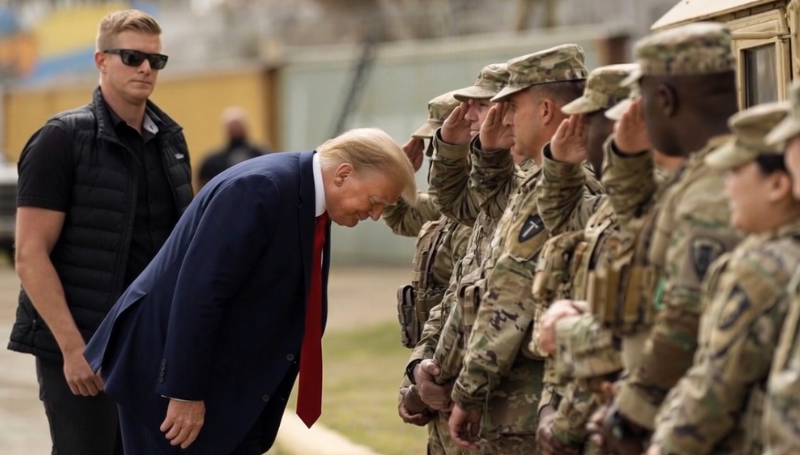
Recent reports indicate that Donald Trump has approved a limited deployment of U.S. Marines to assist with immigration-related operations, particularly at facilities overseen by U.S. Immigration and Customs Enforcement. Officials emphasize that these troops are not being used for arrests or direct enforcement duties. Instead, their responsibilities are described as supportive in nature, including administrative work, transportation coordination, and assistance with internal facility operations.
Despite the restricted scope of their role, the decision has generated widespread attention and discussion. Immigration enforcement in the United States has historically been handled by civilian agencies, making the involvement of military personnel—regardless of function—a noteworthy development. For many observers, even a logistical military presence represents a shift in how immigration operations are conducted.
Communities near these facilities may perceive the presence of Marines as a significant change. Critics argue that introducing military support into civilian systems risks blurring the traditional line between defense and domestic law enforcement. They warn that even indirect involvement could set a precedent, potentially leading to broader use of military resources in similar situations in the future.
At the same time, supporters of the decision frame it as a practical response to increasing demands on immigration infrastructure. With detention centers facing capacity challenges and staff shortages, additional logistical assistance could help improve efficiency and reduce strain on existing personnel. From this perspective, the deployment is seen as a temporary and targeted measure rather than a fundamental policy shift.
Still, the situation raises important questions about perception and long-term implications. The presence of military personnel, even in non-enforcement roles, may influence how these facilities are viewed by the public and those directly affected. It also sparks broader discussions about the appropriate boundaries between military and civilian responsibilities within the United States.
Ultimately, this development is not just about immediate operational needs. It highlights ongoing debates over immigration policy, government authority, and the evolving role of federal institutions. As discussions continue, attention remains focused on how such decisions may shape both current practices and future approaches to immigration enforcement.