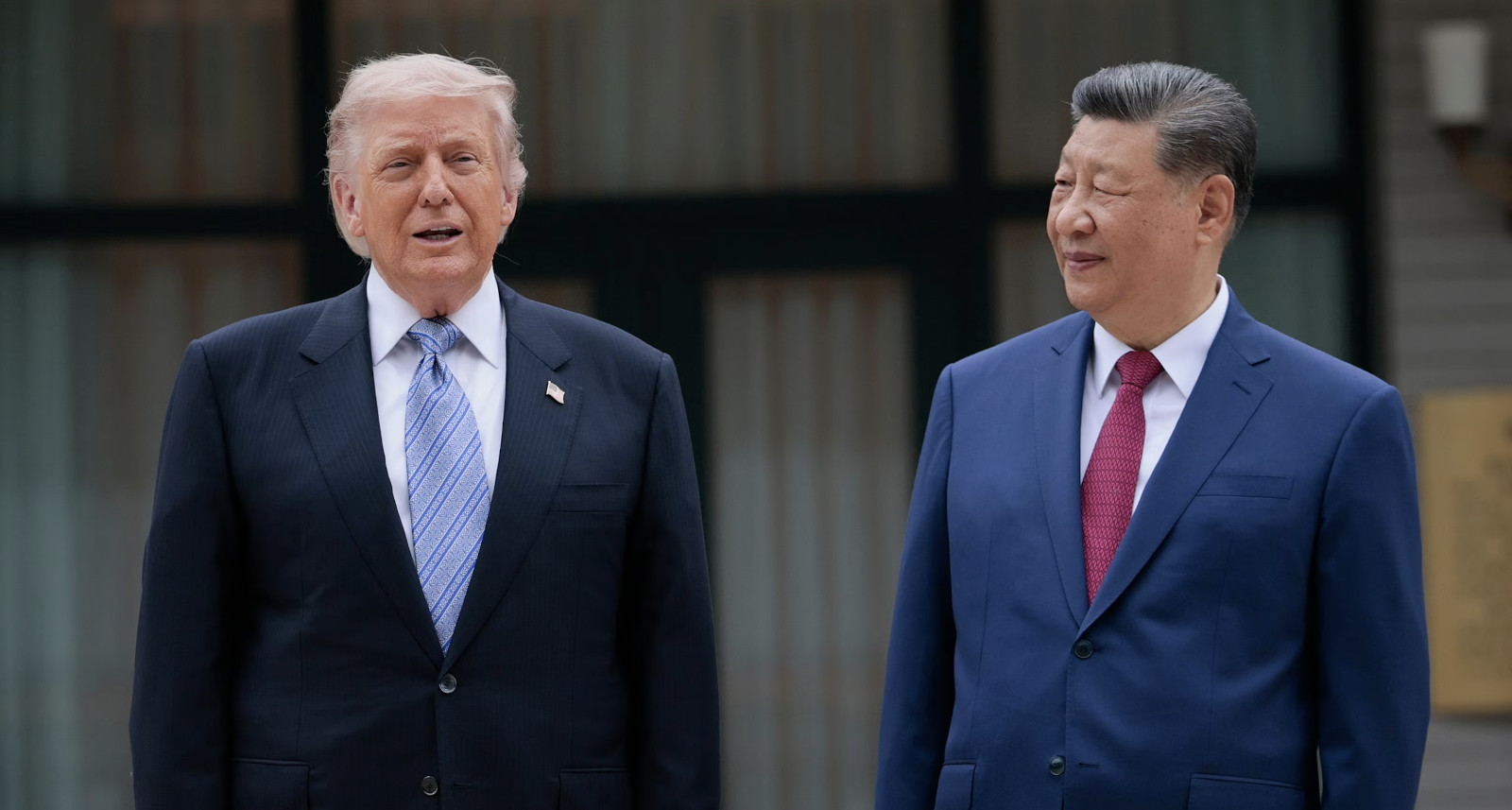
Chinese President Xi Jinping is scheduled to arrive in Washington, D.C., on Wednesday around 6:00 p.m. Eastern Time at Joint Base Andrews.
Jinping and his counterparts will be in the U.S. for a three-day state visit centered on trade, technology, security, and diplomacy.
President Donald Trump plans to greet Xi and First Lady Peng Liyuan personally at Joint Base Andrews Wednesday evening.
The White House is preparing a red-carpet welcome before formal summit meetings begin Thursday morning.
Xi’s visit is his first trip to Washington in over a decade and his first visit to the U.S. in nearly three years.
Thursday’s ceremonies will include 479 military personnel positioned across the South Lawn, State Floor, and Rose Garden.
The leaders are expected to discuss artificial intelligence, tariffs, rare-earth minerals, fentanyl precursors, Taiwan, and Iran.
The two leaders will likely speak heavily on the accelerating artificial-intelligence competition between Washington and Beijing.
Trump emphasized that competition Tuesday during his United Nations address, calling advanced artificial intelligence “superintelligence.”
“Whoever wins superintelligence wins,” Trump said while arguing the United States currently holds an advantage.
Trump added, “And we’re leading now over China by a lot,” promising his administration intends to preserve that position.
American officials have also accused Chinese companies of copying U.S. artificial-intelligence models, allegations Beijing disputes.
Washington continues restricting exports of leading-edge chips and related technology that could strengthen China’s military or AI capabilities.
Trade remains another major agenda item as both governments attempt to preserve an eleven-month truce expiring in November.
Officials have discussed reciprocal tariff reductions covering approximately $30 billion in nonsensitive goods from each country.
China imposed retaliatory duties during the earlier tariff confrontation, while Washington repeatedly raised levies on Chinese imports.
Trump and Xi later met in Beijing during May, producing new trade mechanisms and additional Chinese purchasing commitments.
China agreed to buy more American agricultural products and Boeing aircraft as part of that earlier economic understanding.
Negotiators are also discussing reducing China’s 15% tariff on American liquefied natural gas, according to Reuters.
Rare-earth minerals remain central because China dominates processing capacity for materials essential to electronics, weapons and advanced manufacturing.
Washington wants greater access and fewer Chinese export restrictions, while Beijing objects to American technology controls.
Trump is also expected to press Xi over Chinese exports of chemicals used to manufacture illicit fentanyl.
China announced new guidelines this week governing criminal cases involving fentanyl-related substances before Xi’s Washington arrival.
Another expected subject is Iran, where Beijing has maintained economic ties despite Washington’s pressure campaign against Tehran.
Trump has urged China to use greater leverage over Iran while American forces remain engaged in the regional conflict.
Taiwan represents another major disagreement, with Beijing claiming the self-governed island and opposing American weapons sales.
China’s ambassador called Taiwan and human rights among four “red lines” that Washington should not challenge.
The United States remains Taiwan’s principal arms supplier, although a roughly $14 billion weapons package has not received approval.
Trump said after May’s Beijing summit that the pending arms package represented a “very good negotiating chip.”
Human-rights concerns may also surface, alongside American demands involving U.S. citizens and others detained inside China.
Fox reports Trump may press for Gulshan Abbas, whom U.S. officials describe as wrongfully detained for eight years.
Beijing accused Abbas of participating in terrorism after her sister publicly criticized China’s treatment of Uyghurs.
First Lady Melania Trump is expected to accompany Peng to the Smithsonian National Museum of Asian Art.
Thursday evening’s state dinner is expected to bring major technology executives directly into the diplomatic spotlight.
Expected guests include Sam Altman, Jensen Huang, Sundar Pichai, Michael Dell, Jeff Bezos, Elon Musk, and Tim Cook.